REVIEW · AUCKLAND
Auckland: Rotorua Tour with Mitai Māori Village & Wai-O-Tapu
Book on GetYourGuide →Operated by ExperienceKart · Bookable on GetYourGuide
Geysers by day, Māori ceremony by night. This 13-hour day tour strings together hangi lunch with a war canoe display, then sends you to Wai-O-Tapu’s famous geothermal sights like the Champagne Pool. The one thing to plan for is the long day plus uneven, hot/variable terrain where you’ll want real grip shoes and steady footing.
I like that it’s not just a “see a show” stop. You get a guided Māori village program with food and performances, then a self-guided walk at Wai-O-Tapu so you can move at your pace. One practical catch: it’s not wheelchair-friendly, and vegan options aren’t guaranteed because of how the Māori food is prepared.
In This Review
- Key moments that make this tour work
- Auckland to Rotorua: the scenic 13-hour rhythm by minibus
- Mitai Māori Village: hangi buffet lunch and the ground-oven smell
- The powhiri, haka, poi, and war canoe moments you’ll remember
- Wai-O-Tapu Thermal Wonderland: Champagne Pool, Devil’s Bath, and bubbling mud
- What to wear and how to pace yourself on geothermal paths
- Price, value, and who this day trip fits best
- Should you book this Auckland to Rotorua tour?
- FAQ
- How long is the Auckland to Rotorua tour?
- Is hotel pickup and drop-off included?
- What food is included during the tour?
- Is Wai-O-Tapu guided or self-guided?
- What should I bring for the geothermal walk?
- Is this tour suitable for wheelchair users?
Key moments that make this tour work
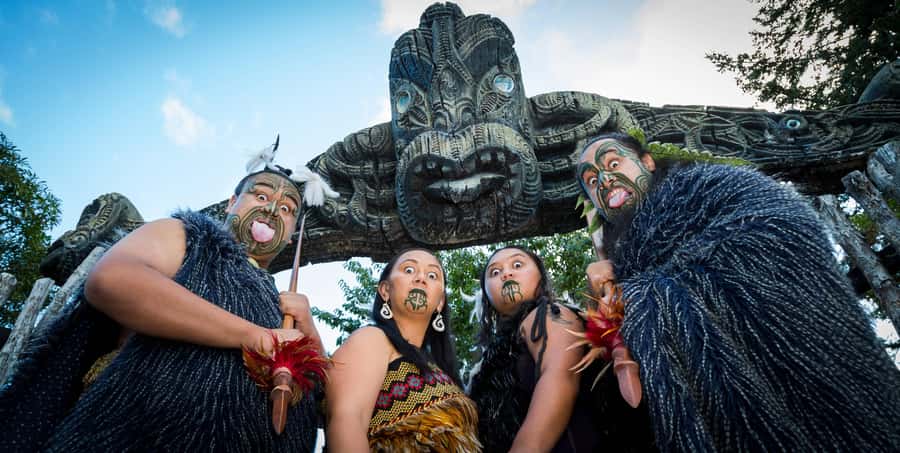
- Hangi buffet lunch at Mitai Māori Village cooked in a ground oven style pit
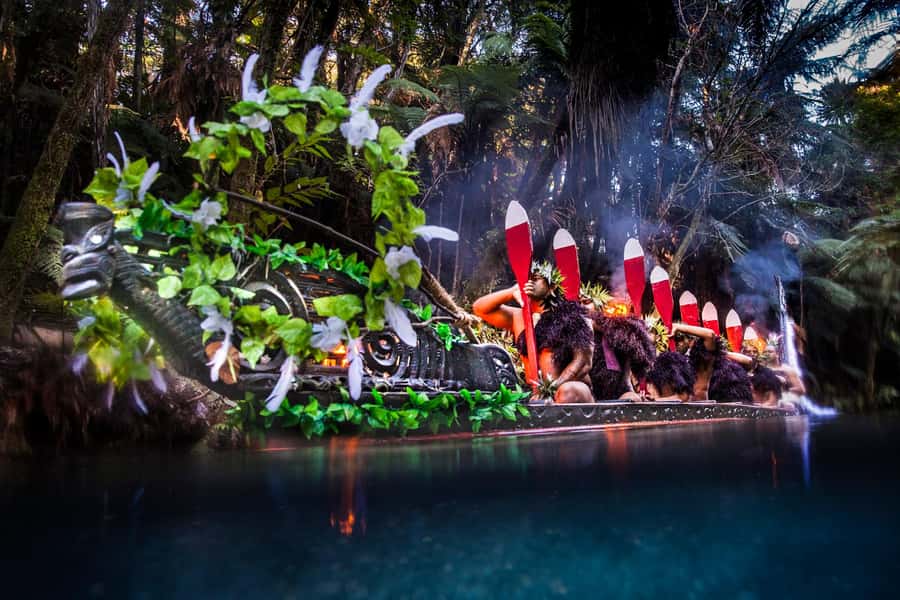
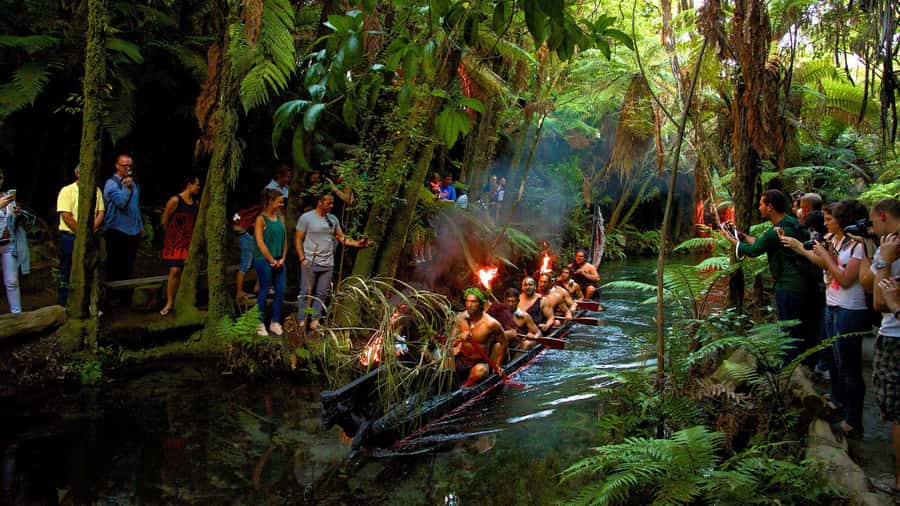
- War-canoe experience on the Wai-o-Whiro stream paired with high-energy cultural performance items
- Real cultural context for Wero, Pōwhiri, Waiata, Mōteatea, Poi, Haka, and even ta moko art
- Wai-O-Tapu self-guided walk with time to hit the big visual stops like the Champagne Pool and bubbling mud
- Minibus comfort and convenience with CBD hotel pickup/drop-off, water, and onboard Wi-Fi
- Built-in leisure time so you can linger for photos instead of feeling rushed nonstop
Auckland to Rotorua: the scenic 13-hour rhythm by minibus
This is a full day out of Auckland—about 13 hours total, with roughly 3.5 hours on the road each way. That sounds long, but it’s also what makes Rotorua doable as a day trip. You’ll ride in a temperature-controlled minibus with water and onboard high-speed internet, and you’ll have an English-speaking tour escort along the way.
Pickup is from Auckland CBD-area hotels, with a long list of options in the central part of town. The tour recommends you show up 10 minutes early, because they can’t wait if you’re late—so set an alarm and don’t rely on walking speed. (Think: this is one of those schedules where being on time is part of the experience.)
Along the drive, you’ll pass through the Waikato region, with scenic viewpoints and a chance to spot farm animals. It’s a nice setup because it starts you in “rural New Zealand mode” before the geothermal stuff takes over. And when you’re ready to break up the day, there’s a good mix: guided cultural programming at one stop, then a geothermal walk where you can control your pace at the next.
The trade-off is energy. You’ll be sitting for long stretches, then walking on uneven ground. If you don’t love long transit days, this one will feel like a lot. But if you can handle a big day, the payoff is that you get both Māori culture and Rotorua’s thermal wonders without juggling separate tours.
You can also read our reviews of more tours and experiences in Auckland.


Mitai Māori Village: hangi buffet lunch and the ground-oven smell

Mitai Māori Village is where the day becomes more than sightseeing. You’re looking at about 2 hours of guided time there, with lunch included—a hangi buffet plus the cultural performances.
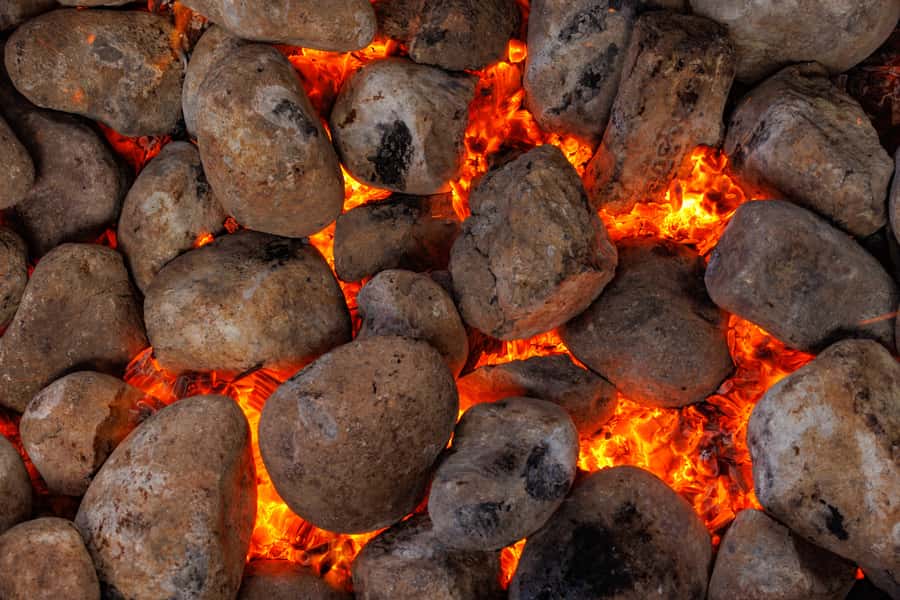
The key detail here is the food method: a hāngī uses an earth-oven pit (about 1–2 meters in the ground), where baskets of kai go onto hot stones at the bottom. That means you’re not just tasting food—you’re watching a food tradition built around heat, time, and place. It also helps you understand why this meal carries cultural meaning, not just flavor.
What I like about having lunch here is that it naturally threads the day together. By the time you sit down to eat, the tour is already teaching you what symbols and sounds mean—so the food lands as part of the larger story.
Expect the experience to include plenty of guided explanations, not just a meal line. You’ll also have access to cultural elements like carving arts and ta moka (tattoo art) mentioned during the program. Even if you’re not an art person, that context turns what could feel like “performance time” into something more like “learn what you’re seeing.”
A practical note: given how Māori kai is prepared, the tour data says not all dietary needs can be met, and vegan options aren’t guaranteed. If your diet is complex, treat this as a “check in first” situation rather than assuming it’ll work out.
The powhiri, haka, poi, and war canoe moments you’ll remember
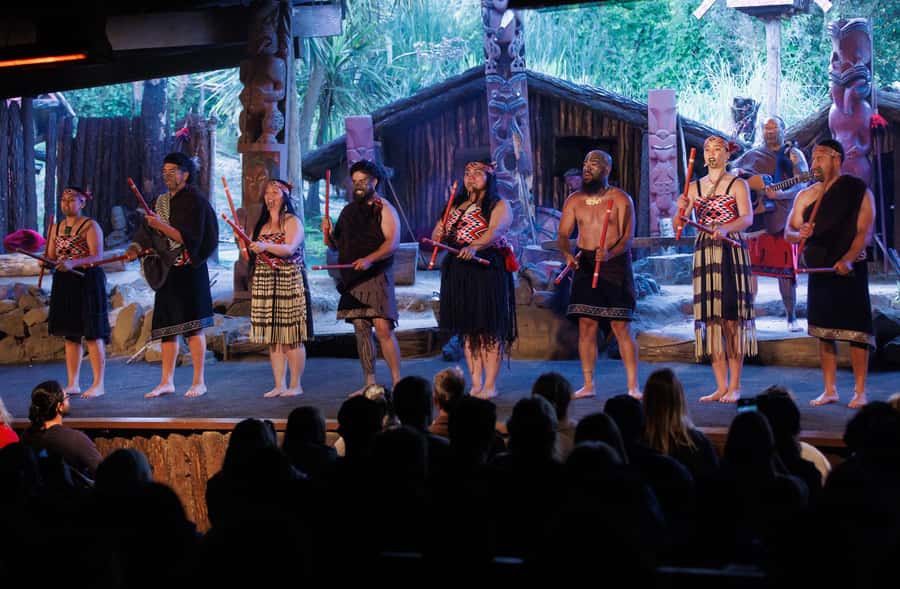
This is the performance portion of the day, and it’s structured to hit several styles in one go. At Mitai Māori Village, you’ll see and hear items that include Pōwhiri (traditional welcome), Waiata (song), Mōteatea (traditional chant), Poi, and Haka—plus Wero, which is a challenge performance. The tone is emotional and dramatic, and it’s designed to make you feel the intent behind the movements, not just watch choreography.
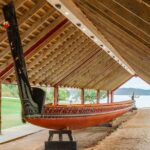
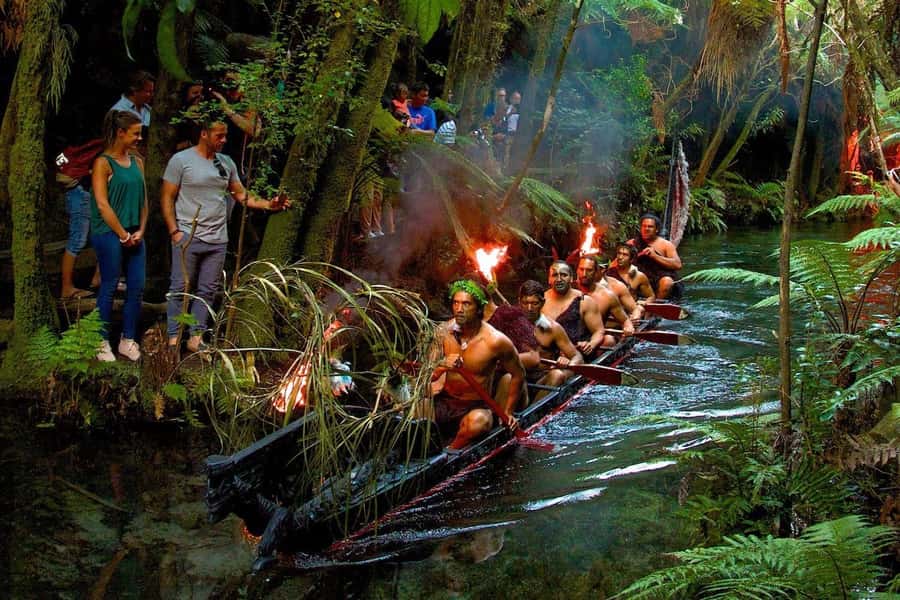
Then comes the standout physical element: a warrior canoe experience along the Wai-o-Whiro stream. This is the moment where the tour connects performance with survival skills and historical warriors’ roles. It’s not a “boat ride.” It’s a display meant to communicate strength and tradition.
The program also references carving and combat/weaponry elements so you understand why the Māori are often described in popular imagination as fierce warriors. Even if you’ve seen a Haka before elsewhere, the explanation parts help you get more out of it because you’re hearing what the actions mean and why they’re used.
Here’s a personal value angle for you: this kind of show is easy to misread if it’s presented as entertainment only. This one is presented with translation and cultural framing throughout the escort-guided sections. That matters when you want your day trip to leave you with real takeaways, not just photos of people moving.
One extra detail from the experience feedback: a guide named Karthik has been praised for being very informative, attentive, and patient, and that kind of guiding tends to make the difference between “cool show” and “I actually learned something.”
Wai-O-Tapu Thermal Wonderland: Champagne Pool, Devil’s Bath, and bubbling mud
After Mitai Māori Village, you head to Wai-O-Tapu Thermal Wonderland. There’s about 30 minutes of travel between stops, then you get roughly 75 minutes at the geothermal area (and the walk is described as self-guided, typically 45 to 90 minutes).
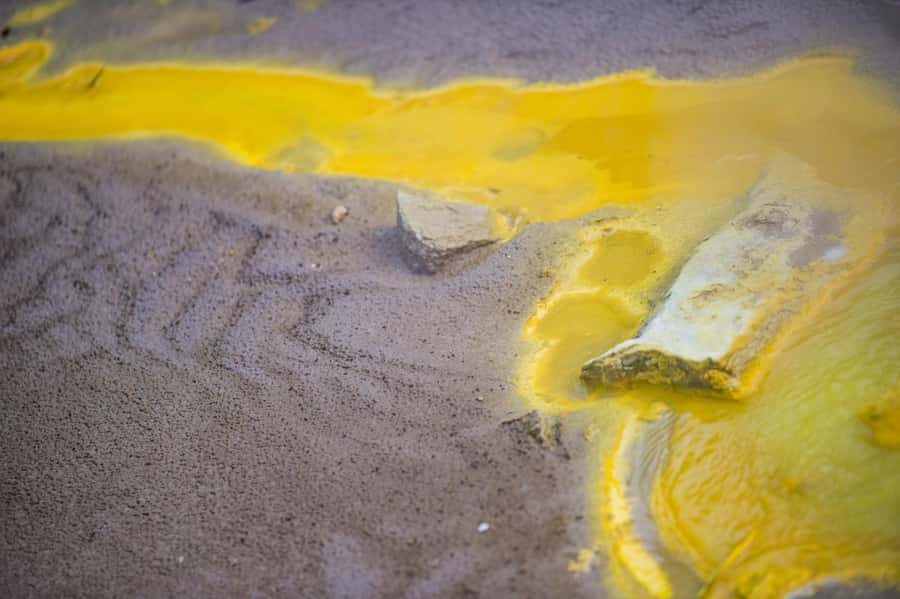
This is one of New Zealand’s most colorful geothermal fields, and the highlights are very specific. You’re going to want to plan your walking so you hit the big visual stops without burning out.
The features you can expect to see include:
- the world-famous Champagne Pool
- bubbling mud
- steaming ground
- naturally colored hot and cold springs
- Devil’s Bath
- huge volcanic craters
- sinter terrace formations
- broad vistas in a bush setting
The setting matters. Wai-O-Tapu sits in natural bush, and the self-guided route takes you through a kind of lunar-looking terrain. The timing is helpful because you’re not stuck with a long guided lecture in the middle of the walking—you can stop when something looks like it belongs on a postcard.
What I’d watch out for: geothermal areas are uneven. The tour emphasizes that you must be able to climb and descend stairs and walk on unpaved or uneven terrain. Also, don’t touch plants—this is the kind of place where the boundaries exist for safety and conservation.
If you love photos, this is the section where your camera gets real work. The thermal colors and steam create fast-changing scenes, and the walk is built for you to pause and shoot.
What to wear and how to pace yourself on geothermal paths
This tour asks for two different “modes”: performance-day comfort and geothermal-walk stamina.
Start with shoes. The info is direct: sturdy footwear is recommended, and jandals, sandals, flip-flops, or high-heeled shoes are not suitable. That isn’t just a vibe. You’ll be moving through a geothermal area with uneven ground, plus stairs. If you’ve ever slipped on volcanic rock, you already get why this matters.
For clothing, bring comfortable clothing plus sun protection. The tour lists hat, sunscreen, water, and a camera as must-haves. It also says tours operate in all weather, and you should wear a jacket or warm layer. Rotorua can feel cooler than Auckland depending on the day, and geothermal steam doesn’t always mean warm air.
Pacing-wise, you’ll appreciate the mix of guided and self-guided time:
- Mitai Māori Village is guided, so you’ll follow the flow and absorb explanations.
- Wai-O-Tapu is self-guided, so you can slow down where the colors are strongest or where the steam looks best.
The long day also means you should think about breaks. The itinerary includes built-in leisure time. Use it. It’s what keeps the experience from turning into a checklist sprint.
One more small point that saves stress: the tour includes onboard water and refreshments, but you’re still walking on uneven ground for a dedicated chunk of the day. If you tend to get hungry, don’t assume you’ll snack your way through transit—count on the hangi buffet lunch as your main meal.





Price, value, and who this day trip fits best
At $283 per person for a 13-hour day, the value hinges on what you count as included. Here, you’re not just paying for transportation. Your money covers:
- return transfers from Auckland with CBD pickup/drop-off
- a local English-speaking escort
- a full Māori village program at Mitai Māori Village
- Haka and hangi buffet lunch at the village
- admission for the self-guided Wai-O-Tapu walk
- onboard perks like water and high-speed internet
So, you’re paying for a “two-worlds” day: Māori culture plus geothermal sights, wrapped in one coordinated route. That’s why it can feel worthwhile compared with piecing it together yourself—especially if you want a guide translating what you’re seeing and keeping timing under control.
Who it suits best:
- You want a first-time Rotorua day without extra planning.
- You care about meaning and context for the performances, not just a quick show.
- You’re comfortable walking on uneven terrain and handling stairs.
- You enjoy photography and want time to work a self-guided geothermal route.
Who should think twice:
- If you need wheelchair access, this tour isn’t suitable.
- If you have strict dietary needs and need guaranteed vegan options, the tour notes it may not be able to meet all requests.
- If you dislike long transit days, the 3.5-hour drives each way will dominate your day.
Also, it helps that this experience has a 4.9 out of 5 rating based on 20 reviews, which usually signals that the pacing and guidance land well for most people.
Should you book this Auckland to Rotorua tour?
If you want one day that mixes Māori culture (including hangi and multiple performance styles) with Rotorua’s thermal highlights (Champagne Pool, mud, steaming ground, and more), this is a strong choice. It’s guided where it matters and self-guided where you want freedom, which is a smart balance for a long day.
I’d book it if you’re a comfortable walker and you value context around the performances. I’d skip or choose a different format if you need better dietary guarantees or if uneven terrain and stairs are a problem for you.
If you do book, pack for grip and weather, arrive early at pickup, and go in expecting a big, intense day—because that’s exactly what you’re paying for.
FAQ
How long is the Auckland to Rotorua tour?
The tour runs for 13 hours total.
Is hotel pickup and drop-off included?
Yes. Pickup and drop-off are included for Auckland CBD locations, with many hotel options listed.
What food is included during the tour?
Lunch is included at Mitai Māori Village as a hangi buffet, with the experience also including cultural performance components.
Is Wai-O-Tapu guided or self-guided?
Wai-O-Tapu is self-guided. You’ll have a guided entry portion and then self-guided walking time in the thermal area.
What should I bring for the geothermal walk?
Bring comfortable shoes, a hat, a camera, sunscreen, and water. Sturdy footwear is recommended because the terrain is uneven.
Is this tour suitable for wheelchair users?
No. The tour is not suitable for wheelchair users.