REVIEW · AUCKLAND
Auckland Dolphin and Whale Watching Eco-Safari Cruise
Book on Viator →Operated by Auckland Whale and Dolphin Safari · Bookable on Viator
Four and a half hours, sea life on call.
This Auckland Dolphin and Whale Watching Eco-Safari Cruise takes you through the Hauraki Gulf Marine Park on a custom-built 65-foot catamaran, with expert marine commentary as you scan for whales, dolphins, seals, and rare seabirds. You start right in downtown Auckland at Viaduct Harbour, then spend the cruise weaving past islands and harbor viewpoints that keep the scenery moving even when wildlife goes quiet.
What I love most is the mix of wildlife watching and real science. You’re not just hearing general facts—you’re hearing what marine research scientists are tracking, plus which whale species the crew is actively looking for in these waters. The other big win is how often you can get strong dolphin encounters and photo moments, with reports of dolphins coming right up near the boat and blue penguins popping up when the timing is right.
One thing to plan around: wildlife sightings are never guaranteed. Even with a top crew and a solid route, whales can be elusive, and you may leave with fewer sightings than you hoped for—though the operator includes a re-visit option if you don’t see any marine mammals at all.
In This Review
- Key reasons this eco-safari is worth your time
- A 4.5-hour eco safari that starts in the heart of Auckland
- Meet at Viaduct Harbour: the catamaran setup and where you’ll feel the action
- Quick comfort checklist (this matters out on the gulf)
- What you’re really looking for: whales, dolphins, seals, penguins, and seabirds
- About the “no guarantees” reality
- Stop by stop: how the route builds the experience (and what you’ll notice)
- New Zealand Maritime Museum and Viaduct Harbour (where your perspective shifts)
- Auckland Harbour Bridge and Rangitoto Island (early wow-factor views)
- Waitemata Harbour and Hauraki Gulf (when the scanning really ramps up)
- Motuihe Island, Motutapu Island, and Tiritiri Matangi (island zones and bird moments)
- North Head Historic Reserve (last viewing stretch)
- The real value: marine research scientists turn watching into understanding
- Photo and comfort tips that prevent the usual regrets
- Where people tend to get the best shots
- Don’t let crowding ruin the day
- Weather is the wildcard, so dress for it
- Price and value: what you’re paying for at about $135.91
- Who should book this eco-safari, and who might want a different plan
- Should you book the Auckland Dolphin and Whale Watching Eco-Safari Cruise?
- FAQ
- What’s the duration of the Auckland dolphin and whale eco-safari cruise?
- Where does the cruise depart from?
- Do they guarantee whales or dolphins?
- What happens if I see no marine mammals during the trip?
- Is food and drinks included?
- What should I bring for the best experience?
- How many people are on the boat?
- Is hotel pickup included?
- What if weather is bad?
- Is it easy to reach by public transportation?
Key reasons this eco-safari is worth your time
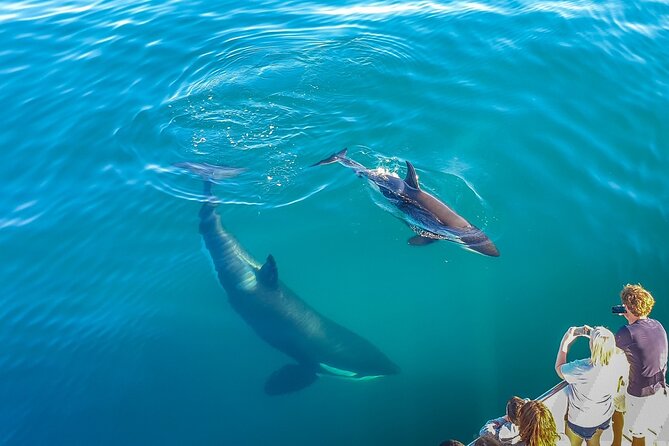
Marine research scientists onboard share what the boat is looking for and how local research connects to conservation.
Built for viewing on a 65-foot catamaran, with space to watch from inside and out while you scan for multiple whale types.
Downtown departure at Viaduct Harbour means you start with city-to-sea views, not a remote drive.
A real target species mix: whales, bottlenose dolphins, seals, blue penguins, and seabirds like gannets and shearwaters.
Route through iconic islands and headlands keeps the scenery varied between sightings.
If you miss marine mammals, you can go again at no extra cost (per the tour terms).
A 4.5-hour eco safari that starts in the heart of Auckland
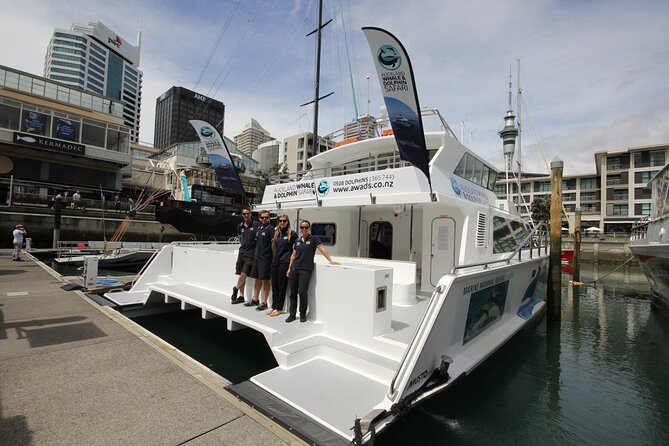
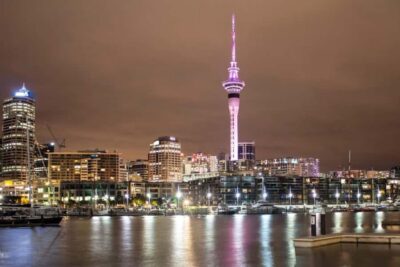
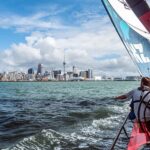
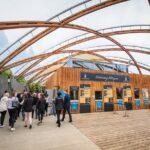
If you want an Auckland day that feels both relaxed and purposeful, this cruise hits the mark. You’re not waiting hours in a bus line or shuttling out to the middle of nowhere. Instead, you meet near the New Zealand Maritime Museum at Viaduct Harbour, walk onto a comfortable 65-foot catamaran, and head into the Hauraki Gulf with the harbor bridge and island scenery unfolding from the water.
The “eco” part matters here because it isn’t just a label. Every ticket purchased contributes directly to Marine Mammal Conservation, and the onboard specialists talk about research and protection work happening in partnership with local marine science groups. That means you’re watching animals in the wild, but you’re also learning why the rules about distance and respectful viewing exist.
There’s also a practical side: it’s long enough (about 4 hours 30 minutes) to give you real chances at wildlife, but not so long that you’ll be bored if the first hour is quiet. The ship is comfortable, and you’ll spend the cruise rotating between scanning, listening, and grabbing photos when something surfaces.
You can also read our reviews of more boat tours in Auckland
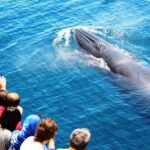
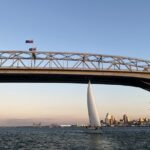
Meet at Viaduct Harbour: the catamaran setup and where you’ll feel the action
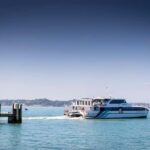
Your day begins at the Eastern Viaduct, Auckland Central area, with the meeting tied to the maritime museum and the Viaduct Harbour docks. After check-in, you board a custom-built 65-foot (20-meter) catamaran designed for ocean viewing. One reason this matters: whale watching is basically a game of positioning. The better you can see, the more likely you are to catch a blow, a fin, or a quick surfacing.
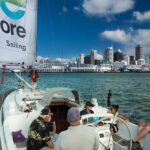
The boat is described as comfortably appointed for viewing, and the cruise is laid out so you can watch from more than one spot onboard. If you want photos, pay attention to deck access. In real-world use, the front deck tends to be the most action-heavy area, especially when the boat is underway and dolphins may appear near the bow. If you prefer stability and calm sightlines, you can also choose a more sheltered viewing position inside.
Group size can affect comfort. The tour caps at 99 travelers, and during peak seasons you can feel the crowding—especially around the best photo angles. The good news: the crew is there to manage viewing spots and remind people to rotate so everyone gets a fair shot when wildlife appears.
Quick comfort checklist (this matters out on the gulf)
- Bring warm layers and weatherproof gear (the gulf can change fast).
- Pack a sun hat with chin strap, sunscreen, and sunglasses.
- Bring binoculars if you have them.
- Wear flat-soled shoes for deck movement.
- If you’re sensitive to wind, plan to dress for it, not for the temperature on shore.
What you’re really looking for: whales, dolphins, seals, penguins, and seabirds
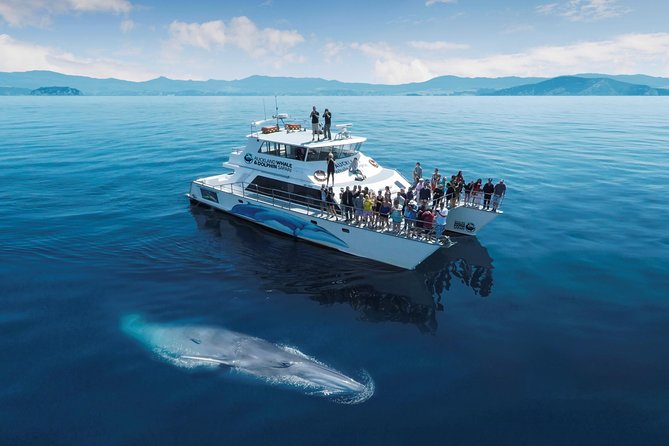
This cruise sells a specific target set, and that helps you know what to expect once you’re underway. You’ll spend the time in the Hauraki Gulf Marine Park, which includes five marine preserves and is known for high biological diversity. The crew’s job is to help you find the animals that live in these waters and to point out the seabirds that use the same air-and-water zones.
Here’s the practical checklist you can keep in your head during the cruise:
Whales (variable sightings, but they do track them)
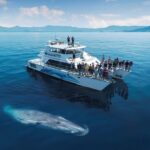
The tour aims at multiple whale types—especially Bryde’s whales—and it’s set up for spotting up to six whale species. In plain terms: they’re not guessing wildly. They’ll explain which whales they’re tracking and how they’re watching for those patterns.
Dolphins (often the easier win)
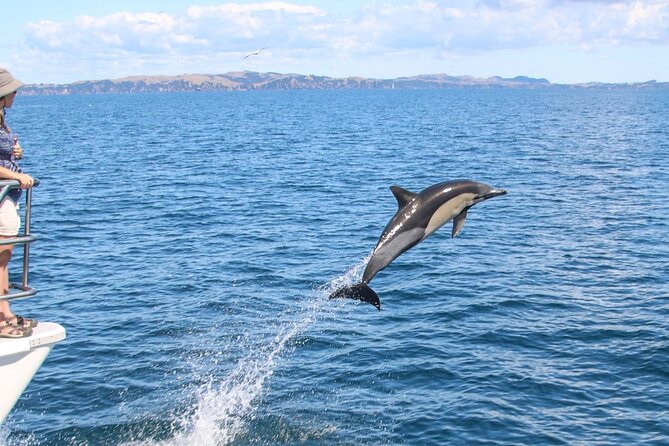
Dolphins are frequently seen, particularly bottlenose dolphins. You’ll likely hear about expected pod behavior and where crews commonly watch for activity. In many successful trips, dolphins come in close enough for people to capture short bursts of playful surfacing near the boat.
Seals (possible, not constant)
The tour includes seals in its wildlife goals. Expect them to show up intermittently—usually when the boat finds the right stretch of water and conditions line up.
Blue penguins (photo opportunities when timing is right)
Be ready to spot blue penguins. You may not see them every trip, but the cruise is structured to look for birds and small marine-life moments along the island route.
Seabirds overhead (often more consistent than you think)
Even on a day with fewer mammals, bird activity can keep you engaged. The crew points out species like Australasian gannets, petrels, shearwaters, and white-fronted terns—and you’ll learn how to spot them as they soar or plunge toward the water.
About the “no guarantees” reality
The tour clearly states wildlife viewing isn’t guaranteed. Still, dolphins and whales are often in these waters, and the crew works to locate them during the cruise window. If you leave without seeing any marine mammals, the operator allows you to return another day at no extra charge. That policy is a big deal because it reduces the sting of a quiet wildlife day.

Stop by stop: how the route builds the experience (and what you’ll notice)
Your itinerary includes a meeting stop at the maritime museum and then a sequence of harbor and island areas as the cruise moves through the gulf. Some of these are true stops you’ll approach closely; others are best understood as viewpoint segments where the crew steers to likely wildlife zones.
New Zealand Maritime Museum and Viaduct Harbour (where your perspective shifts)
The first part is all about getting you set up: meet at the docks area, get oriented, then depart from Viaduct Harbour. This is your transition moment from “city day” to “ocean day.” You’ll start with downtown Auckland energy but within minutes you’re watching water traffic, harbor lines, and bird movement.
Auckland Harbour Bridge and Rangitoto Island (early wow-factor views)
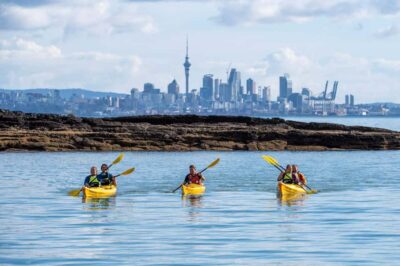
As you move out, the Auckland Harbour Bridge and Rangitoto Island help you orient fast. Even if the whales don’t show in the first stretch, the scenery keeps the cruise moving. It’s also helpful because you learn what direction the ship is heading and where the crew is likely to search next.
Waitemata Harbour and Hauraki Gulf (when the scanning really ramps up)
These sections are where wildlife watching becomes the main event. You’ll hear commentary timed to what the crew is doing and what they expect to find. This is also where you’ll start matching what you hear—like tracking focus—with what you see on the water surface.
Motuihe Island, Motutapu Island, and Tiritiri Matangi (island zones and bird moments)
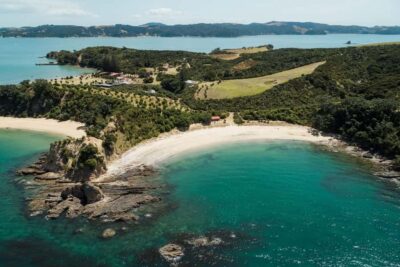
These island names matter because islands are not just pretty—they create food and shelter patterns that attract marine life and birds. When the boat works these areas, the crew will likely point out seabirds and any nearby mammal activity. Even when mammals are quiet, island bird activity can keep you scanning.
North Head Historic Reserve (last viewing stretch)
By the end of your cruise, the ship is heading back toward Auckland. The North Head Historic Reserve segment gives you a final chance to catch movement on the water. It’s a good moment to re-check your camera settings and make sure you’re ready when the crew calls out a likely sighting.
The real value: marine research scientists turn watching into understanding
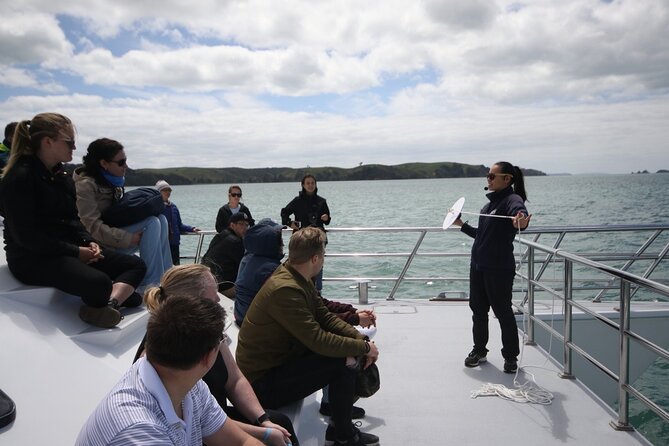
A lot of whale tours tell you what whales are. This one spends more time on what’s happening in the gulf right now and how research connects to conservation.
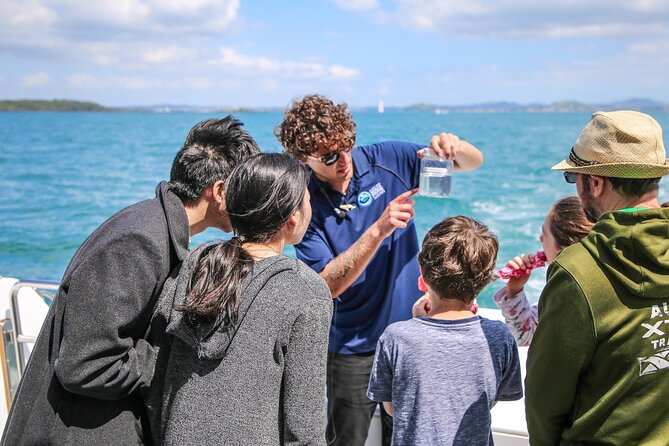
You’ll hear expert commentary from marine research scientists during the cruise, including what species the crew tracks and how local partnerships inform their work. The outcome for you is simple: you’re not just reacting to surprises. You’re learning the “why” behind the scanning, which makes the experience feel more grounded.
This also changes how you’ll view the animals you do see. When you understand that the crew is actively collecting data and respecting wildlife behavior, it becomes easier to stay patient and let animals choose their level of interaction. A calm, respectful approach tends to lead to better sightings too, because you’re not pressuring the animals into unnatural behavior.
Photo and comfort tips that prevent the usual regrets
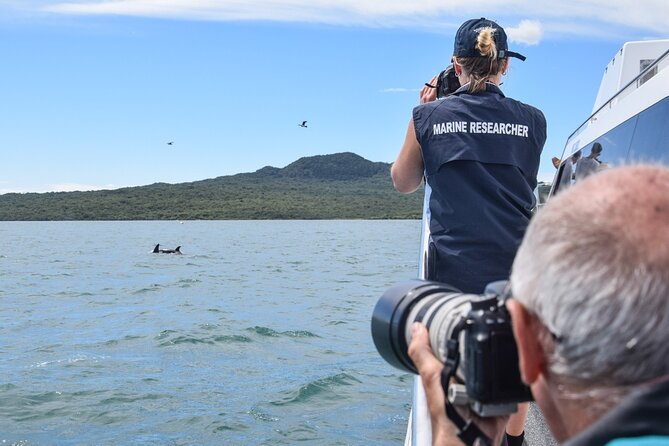
A 65-foot catamaran can be comfortable, but ocean viewing has a few realities: wind, spray, and people rushing to the best edge angles. If you want the best day, plan like a photographer, not like a tourist.
Where people tend to get the best shots
The front deck is often the most intense spot when the boat is underway, since the bow area is where fast, playful dolphin moments may appear. If you’re chasing photos, that’s your starting point—just remember you may need to rotate when it gets crowded at prime angles.
Don’t let crowding ruin the day
On a full outing, it can feel packed, especially when rain hits and everyone tries to cluster under cover. That’s when good crew management really matters. The operator asks passengers to rotate so more people can see and photograph wildlife without blocking others. If the weather turns, treat the indoor viewing areas as a reset button, not a downgrade.
Weather is the wildcard, so dress for it
The tour advises warm layers and weatherproof gear because conditions around Auckland’s waters can shift. Review feedback backs this up—some days are smooth, and some days are choppy. If you think you’ll be bothered by motion, plan to bring the gear that keeps you warm and stable. Dry layers also make the whole cruise easier to enjoy.
Price and value: what you’re paying for at about $135.91
At around $135.91 per person, this isn’t a cheap “sit and see what happens” activity. You’re paying for a few things that add up:
- A custom 65-foot catamaran built for viewing.
- A full half-day outing (about 4.5 hours), not a short hop.
- Expert commentary from marine research scientists.
- A conservation link: every ticket contributes directly to Marine Mammal Conservation.
- A route designed to cover multiple wildlife and seabird zones around the gulf.
What’s not included is also part of the value equation. Food and drinks aren’t included, though you can buy them onboard. There’s also no hotel pickup or drop-off, so you’ll want to factor in how easy it is for you to get to Viaduct Harbour.
If you do your planning right, this price starts to make sense because you get more than wildlife spotting. You get a guided, research-minded explanation of what you’re seeing and why it matters. And if your trip ends with no marine mammal sightings, the return option at no extra charge reduces the chance you’ll feel like you paid for disappointment.
Who should book this eco-safari, and who might want a different plan
This cruise is a strong match if:
- You want a half-day activity that combines wildlife and education.
- You’re okay with wildlife variability and still want the best chance through an active crew search.
- You enjoy the “watch the water, listen to the patterns” style of travel—because the commentary helps you stay locked in.
It may be less ideal if:
- You get easily frustrated by crowding at peak times and want lots of personal space for photos.
- You’re expecting guaranteed whale sightings. This tour targets whales and often delivers, but it explicitly can’t guarantee it.
For families, it tends to land well because the wildlife checklist is varied: dolphins, seabirds, and penguin sightings can keep younger eyes engaged even when whales are late.
Should you book the Auckland Dolphin and Whale Watching Eco-Safari Cruise?
I’d book it if your Auckland schedule can spare a half day and you want something genuinely tied to conservation and real marine research, not just a generic cruise. The combo of downtown departure, a viewing-friendly catamaran, and onboard marine scientists is the core reason to choose it.
Still, go in with the right mindset. Bring warm layers, expect that some days are louder (dolphins) and some are quieter (whales), and be ready to watch for seabirds and penguins as a bonus game. If you handle that variability, this is one of the more satisfying ways to spend time on the water in Auckland.
FAQ
What’s the duration of the Auckland dolphin and whale eco-safari cruise?
It’s about 4 hours 30 minutes.
Where does the cruise depart from?
It departs from Viaduct Harbour in downtown Auckland.
Do they guarantee whales or dolphins?
No. Wildlife viewing can’t be guaranteed, though dolphins and whales are often seen in these waters.
What happens if I see no marine mammals during the trip?
If you don’t see any marine mammals, you can go again another day at no extra charge.
Is food and drinks included?
No. Food and drinks are available to purchase onboard.
What should I bring for the best experience?
Dress in warm layers and weatherproof gear. Bring a sun hat, sunscreen, sunglasses, a camera, binoculars, and flat-soled shoes.
How many people are on the boat?
The tour has a maximum of 99 travelers.
Is hotel pickup included?
No hotel pickup or drop-off is included. You’ll make your own way to the meeting point at Viaduct Harbour.
What if weather is bad?
This experience requires good weather. If it’s canceled due to poor weather, you’ll be offered a different date or a full refund.
Is it easy to reach by public transportation?
Yes. It’s listed as near public transportation, and service animals are allowed.