REVIEW · AUCKLAND
From Auckland: Guided Tour of Piha with Scenic Beach Walks
Book on GetYourGuide →Operated by Wild Compass · Bookable on GetYourGuide
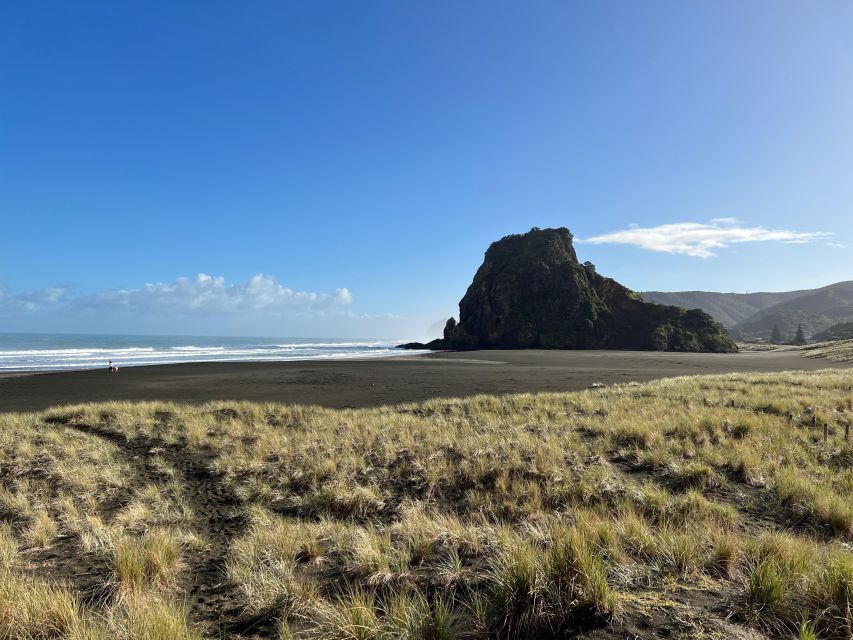
Piha looks wild on the map. Then you’re standing on black sand. This Auckland-to-Piha day trip trades city pace for the kind of West Coast scenery that makes you slow down: cliffs, caves, native forest, and that iron-sand feel under your feet.
I really like two things about this outing. First, the guided walks on North and South Piha help you reach spots you’d miss on your own, including sea-cave tunnels and lookout views. Second, the small group and live guide (English) make it feel relaxed, and the guide Louis seems to bring real local knowledge, from flora and fauna to what you’re seeing along the drive.
One possible drawback: the shore walking can be a bit awkward. You’ll move across rocks and uneven ground, and if you choose the optional barefoot sand, you’ll want to go in with realistic expectations for traction and footing.
In This Review
- Key highlights I’d plan around
- A 6.5-hour Piha day trip that feels like the West Coast, not a checklist
- Getting there: Viaduct Basin meet-up and a comfortable Mercedes Sprinter ride
- Waitakere Ranges lookouts: Auckland Harbor from about 390 m
- South Piha on foot: black sand, sea caves, and cliff-time
- North Piha loop: native forest, caves, and a calmer rhythm
- Wildlife is more about timing and attention than a checklist
- Snacks, cold water, towels, and the beach picnic lunch
- Navigating rocks and waves: the only real “work” you’ll do
- Group size, guide style, and why it matters at Piha
- Who should book this Piha tour (and who might skip it)
- Price and value: what you’re really paying for
- Should you book this Piha day trip?
- FAQ
- How long is the Piha day trip from Auckland?
- How far will I walk during the tour?
- Is the group small?
- What language is the tour guide?
- Will I have chances to see wildlife?
- Is the barefoot walking required?
- Is there food included?
- Can I cancel and get a refund?
Key highlights I’d plan around
- North and South Piha on foot: cliffs, black sand, and cave areas across both ends of the beach
- Native forest loop at North Piha: a walk that mixes trees, beach, and cave spots
- Wildlife spotting with your eyes up: tui and rosellas in the forest, plus chances at seals or sea lions
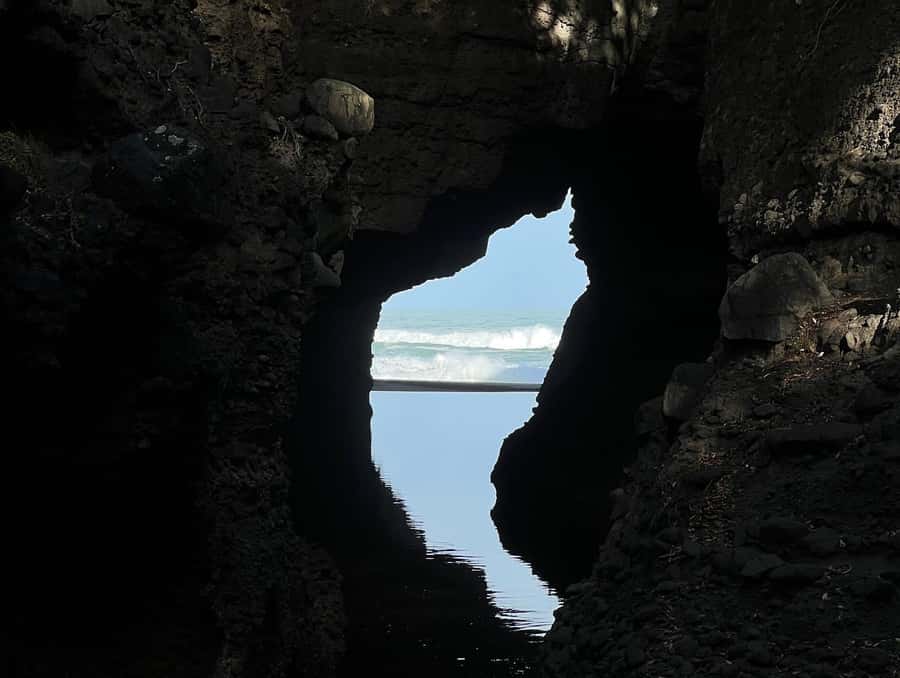
- Sea caves and natural tunnels: you’ll navigate around massive rock features and tide-adjacent areas
- Harbor views from the Waitakere Ranges: high-altitude stops with Auckland Harbor overhead
A 6.5-hour Piha day trip that feels like the West Coast, not a checklist
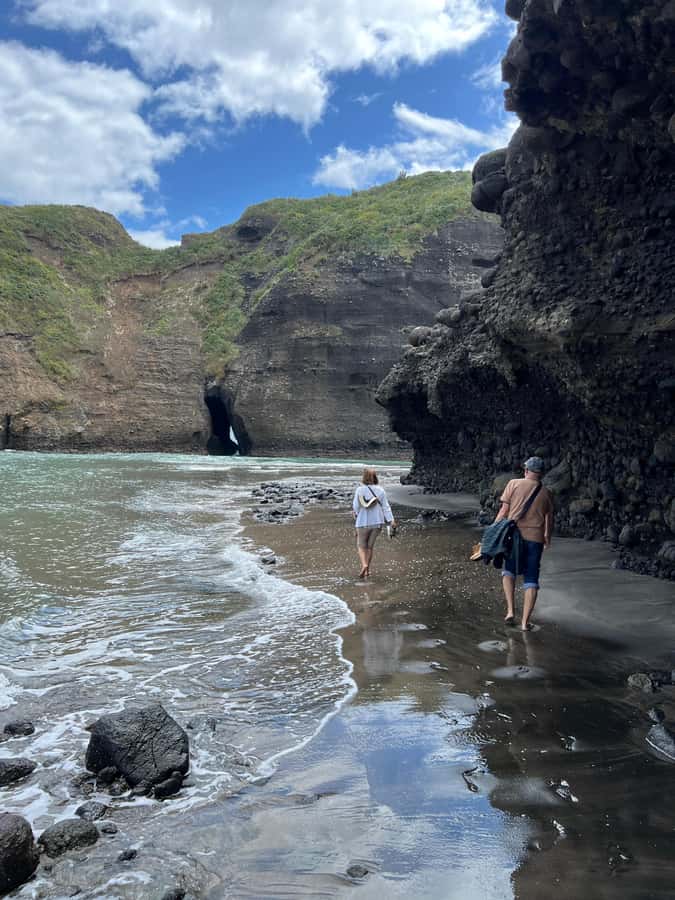
If you only have a day in Auckland, Piha is one of the best ways to get a real change of scenery. You trade traffic and cafes for a rugged coastline where the sand is black with iron, the cliffs are dramatic, and the forest patches feel like their own world.
This trip is also designed for people who want a guided day but don’t want every minute packed. You’re in a Mercedes Sprinter with a small group (limited to 11), and you’ll get a mix of viewpoint stops, two beach walking sessions, plus breaks that keep you from feeling wiped out. The walking total can be up to about 5 km / 3 mi, split across the day, so it’s more “active sightseeing” than a hike marathon.
You can also read our reviews of more guided tours in Auckland

Getting there: Viaduct Basin meet-up and a comfortable Mercedes Sprinter ride
You start at The Pantry Cafe on Auckland’s Viaduct Basin, right by the Park Hyatt building. It’s a smart start area because you can grab coffee or breakfast before you head out, and it’s easy to find relative to the city core.
Then you’re off in a Mercedes Sprinter van, with time to settle in on the drive through the Waitakere Ranges toward Piha. This matters more than it sounds. The farther West Coast scenery is from Auckland than you expect, and having comfortable transport helps you enjoy the scenery instead of spending the day paying for it with fatigue.
During the morning drive, you’ll also get a couple of short breaks for photo stops and scenic viewpoints. The stops are brief, but you’re still moving toward something worth the effort.
Waitakere Ranges lookouts: Auckland Harbor from about 390 m
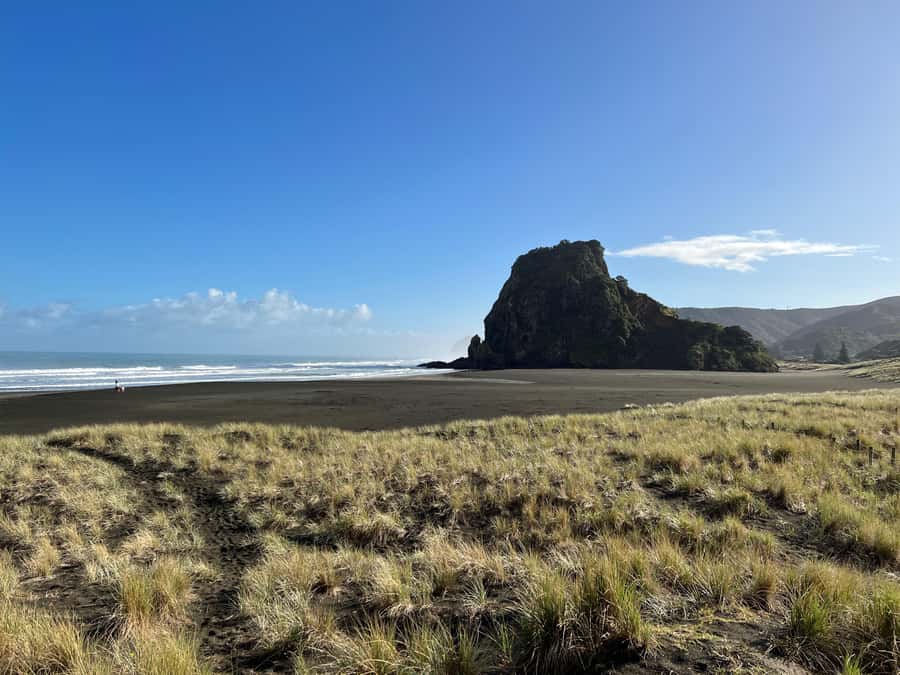
Before you even hit Piha, you get rewarded with two high-altitude lookout stops. This is where the West Coast vibe starts to make sense. You’re looking out from roughly 390 m above sea level (the tour describes views over Auckland Harbor from that height), which gives you a sense of scale—ocean, islands, and the city all in one view.
What I like about this part is the pacing. The lookouts aren’t just a quick pull-over-and-go moment. You get time to take photos, adjust your eyes to the light, and actually register what you’re seeing.
If you’re someone who gets impatient on long drives, these stops are the payoff that keeps the whole day feeling worth it.
South Piha on foot: black sand, sea caves, and cliff-time
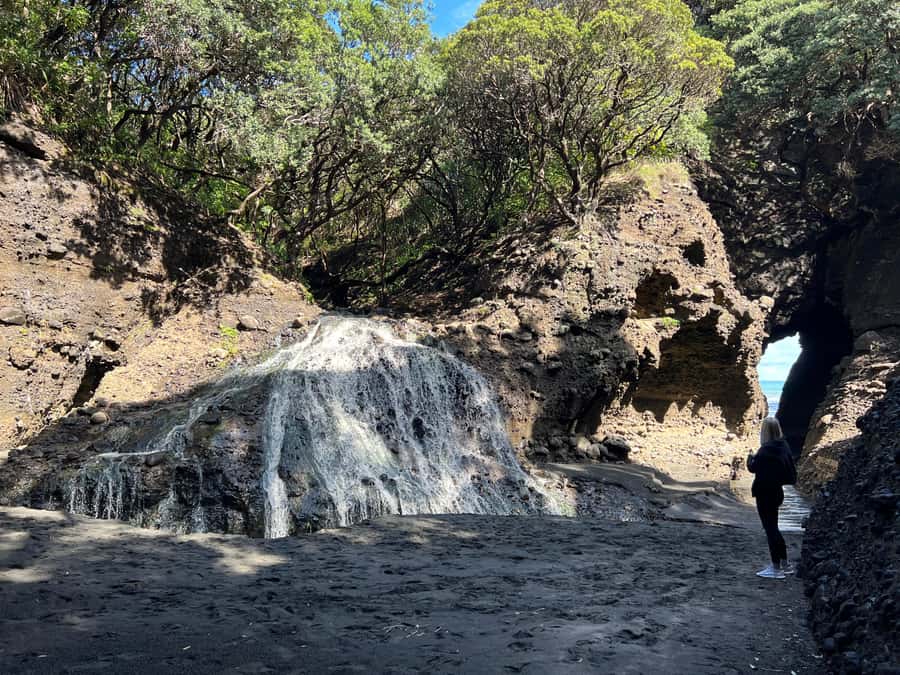
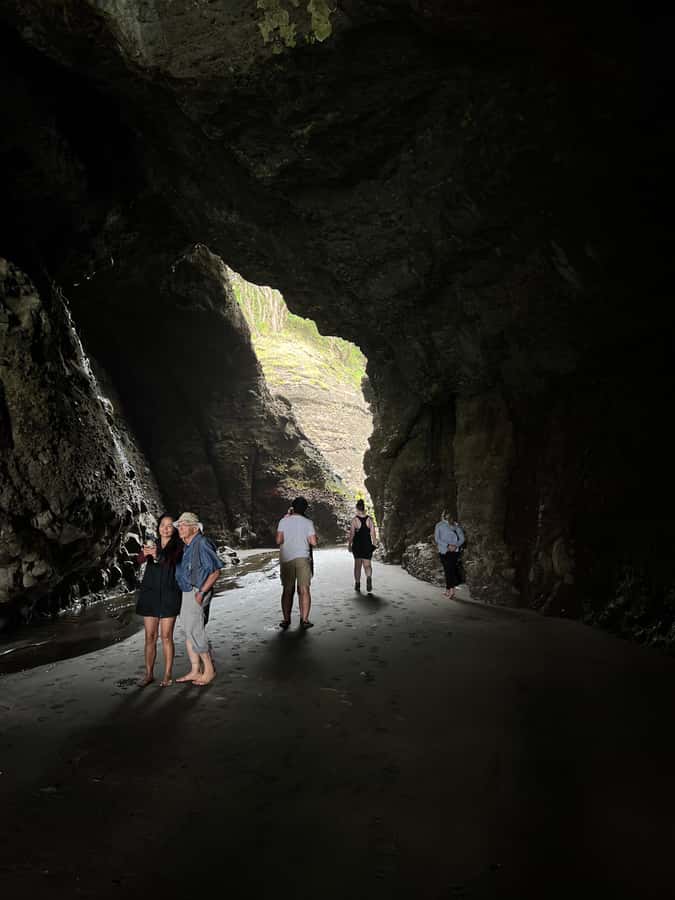
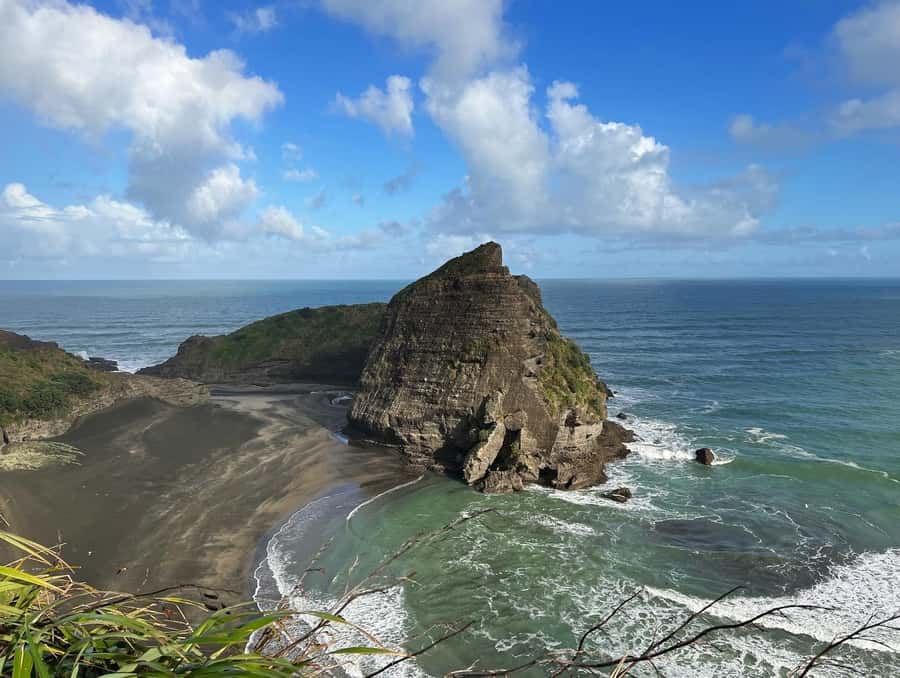
Once you reach Piha, the experience shifts from viewpoint watching to hands-on walking. You’ll head to the wild black sand beach, and the focus in South Piha is the dramatic coastline: towering cliffs and massive sea caves with natural tunnels nearby.
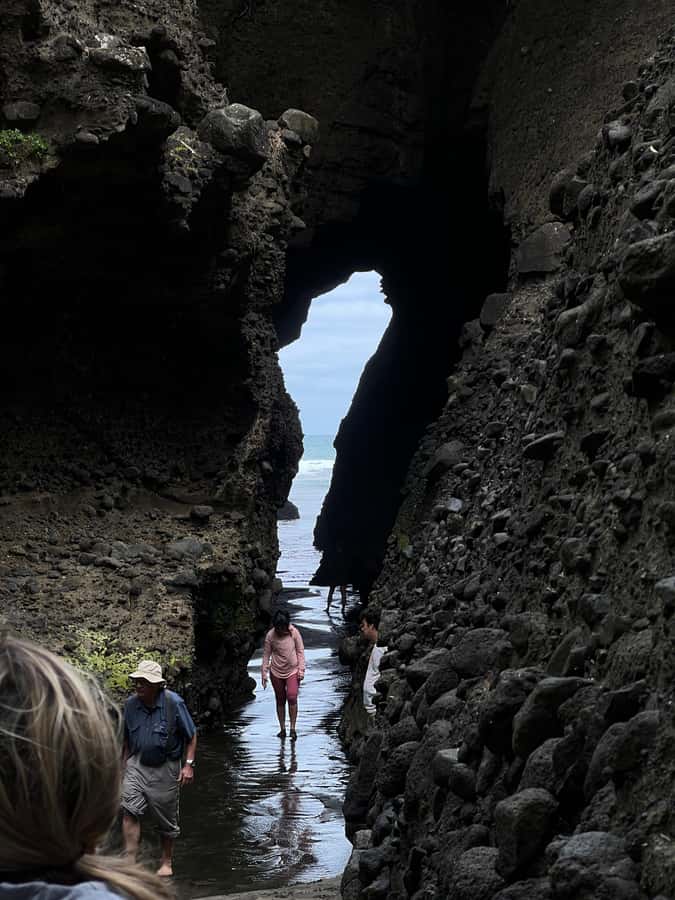
This is the section that feels most “adventure.” You’ll explore around the rock features and walk among cliffs, where you’re close enough to feel how the ocean reshapes the edges of the land. The tour guides you through the area, and there’s an emphasis on navigating the cave-tunnel zones carefully—this isn’t a boardwalk stroll.
You may also find wildlife around the areas, and the guides encourage you to watch for birds in the region. Even when you don’t spot animals, you still get that West Coast realism: salt air, wind shifts, and the way the sand changes underfoot as waves move the shoreline.
A practical note: this is where uneven ground matters. Plan for some scrambling or step-up/step-down moments around rock and tide-adjacent features.
North Piha loop: native forest, caves, and a calmer rhythm
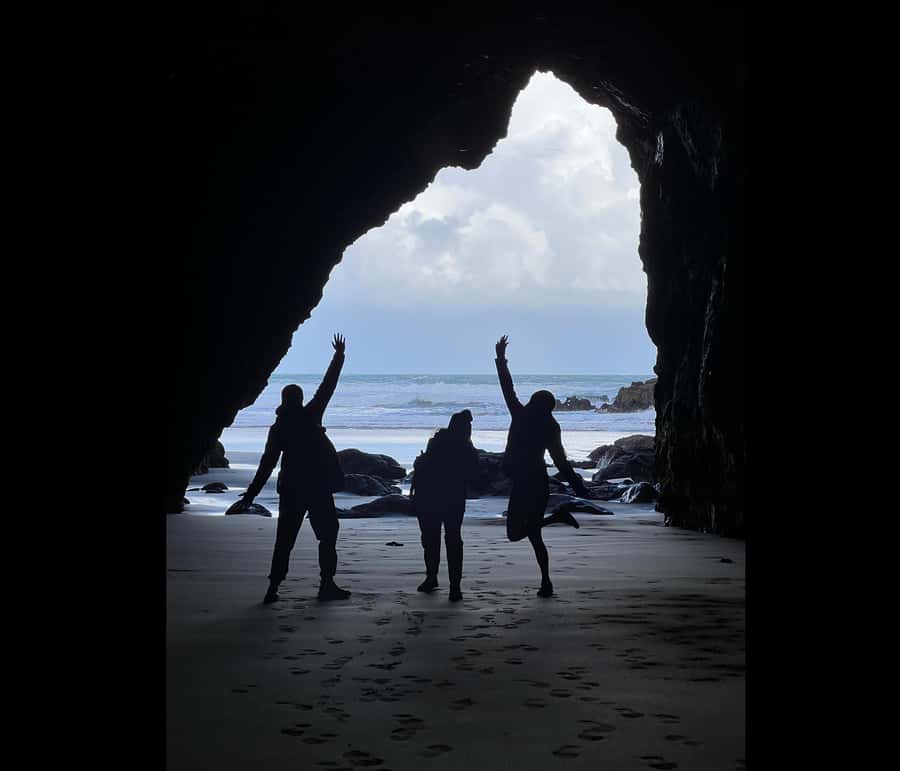
North Piha is where the tour slows slightly into a more varied walk. You’ll go through a loop that moves from native forest onto the beach and then back around to cave areas. It’s a smart route because it keeps your senses busy—trees, then sand, then rock formations again.
Birdlife is part of the point here. The tour explicitly mentions looking out for birds like tui and rosellas in the forest. That’s a big deal if you want more than scenery. Birds make you lift your head and notice detail. You start reading the environment instead of just passing through it.
If you’re lucky, you might see larger wildlife too—seals and sea lions are mentioned as possibilities. The key is that this is “if you’re lucky,” not a promise. Still, you’ll be moving at a pace where spotting something isn’t totally dependent on luck alone. You’ll be in the right zones, with your guide helping you watch the right places.
And yes, the barefoot walk is part of the experience—but it’s optional. Walking barefoot is described as something your guide can lead you on, and it can be a memorable way to feel Piha’s black sand up close. If you have sensitive feet, rough skin, or you’re worried about traction, bring or wear footwear you’re comfortable with and treat barefoot as a choice, not a requirement.



Wildlife is more about timing and attention than a checklist
This day trip’s wildlife angle is built around “chances,” not guarantee. The tour mentions chances to spot penguins, seals, and sea lions, and it specifically encourages bird watching for tui and rosellas. That blend matters because it keeps expectations realistic.
What makes it feel worthwhile is that the walks naturally put you in the right habitats at the right kind of time—forest edges, beach stretches, and cave-adjacent zones. Also, the guide’s local knowledge helps you notice what you otherwise might miss. In the reviews, Louis gets praised for teaching about local flora and fauna and answering questions, which is exactly what you want when you’re trying to spot wildlife without turning the day into a frantic search.
Snacks, cold water, towels, and the beach picnic lunch
Between the two beach walking sessions, you’ll stop at a local café for a break. That keeps your energy up before the afternoon loop and cave walking.
Then comes lunch: a beachside picnic setup at Piha. You’ll be able to grab a towel and enjoy food by the shore. The trip description also notes that healthy snacks, fresh fruit, and cold water are provided along the way, and reviews mention extras like apples and bananas, plus towels and sunscreen. That’s practical value. It means you’re not spending your whole day hunting down snacks or paying convenience-store prices after a few hours in the sun and wind.
If you want to cool off, you can also take a dip when conditions allow—just keep your towel ready and your energy focused. The ocean can be bracing, so don’t treat this as a lazy swim unless you know you’ll enjoy it.
Navigating rocks and waves: the only real “work” you’ll do
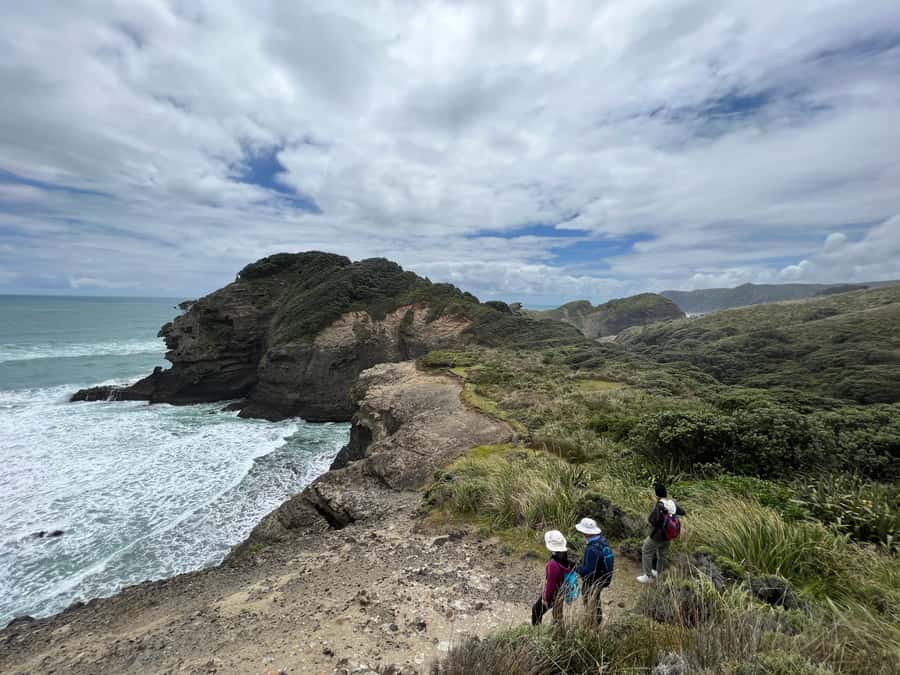
Most of this tour is enjoyable walking and sightseeing. The main consideration is footing. The tour notes a small amount of challenge navigating rocks and waves, and that’s accurate to how Piha works as a coastline.
So here’s my straightforward advice:
- Wear shoes you trust for steps on uneven rock areas. If you want barefoot sand time, do it when the ground is clear and your confidence is high.
- Keep a bit of patience with yourself around cave areas and shoreline edges. Even with a guide, you’re moving through natural spaces, not a managed park path.
- Bring sun protection. It’s the coast; wind and clouds can trick you, and you’ll still be outside for hours.
If you’re someone who hates uneven surfaces, you can still enjoy Piha—just adjust your expectations and stick close to the guide’s suggested route.
Group size, guide style, and why it matters at Piha
Small group trips work better on Piha than you might think. With a maximum of 11 participants, the guide can pace the group through caves and shoreline zones without turning it into a big herd. That’s crucial for safety and for wildlife spotting, where you need a calm moment to actually see what’s there.
The guide Louis comes up repeatedly in feedback as friendly, helpful, and prepared, with strong local knowledge. He’s also credited with finding hidden spots in Piha. That’s not a small thing. Piha’s best areas are easy to overlook if you’re just driving, parking, and wandering without context.
I’d call this the kind of tour where you come away with better questions and better observation skills, not just photos.
Who should book this Piha tour (and who might skip it)
I think this day trip is a great match if:
- You want a guided introduction to Piha without worrying about parking, timing, or getting off track
- You like walks that are active but not extreme (up to about 5 km / 3 mi total)
- You’re the type who enjoys learning about plants and birds while you move through a place
- You want a comfort level of “small group + transport” instead of a do-it-yourself marathon
I’d hesitate if:
- You have mobility limitations or you strongly dislike uneven rocky walking
- You want mostly boardwalk-style sightseeing
- You’re looking for an all-day long hike rather than a 6.5-hour mix of lookouts, beach walks, and breaks
Price and value: what you’re really paying for
Even without exact pricing here, you can judge value by what’s included. You’re getting:
- Round-trip van transport from the Auckland city meet-up area
- A live English guide through multiple key zones
- Guided time on both ends of Piha, including cave and forest sections
- A structured day with breaks: Waitakere lookouts, a café stop, and a beach picnic lunch
- Extras that reduce friction: snacks, fresh fruit, cold water, plus items like towels and sunscreen mentioned in feedback
That’s why the tour often feels like a good deal for a limited time window. A DIY plan might get you to Piha, but it won’t automatically deliver guided walking routes, cave navigation support, and a picnic setup that’s timed with your energy level.
Should you book this Piha day trip?
If you’re choosing between a quick Piha visit and a guided day trip, I’d lean guided—especially for your first time. The combination of black sand walks, cave areas, and native forest, plus the guide’s knowledge (Louis is clearly a standout), makes it more than just a beach day.
Book it if you want an efficient, small-group way to experience the West Coast feeling without turning it into a logistics project. Skip or adjust your plan if you know you won’t enjoy rocky, tide-influenced footing.
If you like your travel days with a bit of nature education, some physical movement, and a picnic lunch that actually lands at the right moment, this one is an easy yes.
FAQ
How long is the Piha day trip from Auckland?
The tour duration is 6.5 hours.
How far will I walk during the tour?
The walking distance can be up to 5 km / 3 mi, split up throughout the day.
Is the group small?
Yes. It’s a small group limited to 11 participants.
What language is the tour guide?
The live tour guide speaks English.
Will I have chances to see wildlife?
The tour mentions chances to spot birds such as tui and rosellas, and it also notes you might spot penguins, seals, and sea lions if you’re lucky.
Is the barefoot walking required?
No. Walking barefoot on the sand is optional.
Is there food included?
Yes. The tour includes snacks, fresh fruit, cold water, and a beachside picnic setup for lunch.
Can I cancel and get a refund?
You can cancel up to 24 hours in advance for a full refund.