
REVIEW · AUCKLAND
Auckland: Group Surfing Lesson with Muriwai Surf School
Book on GetYourGuide →Operated by Muriwai Surf School · Bookable on GetYourGuide
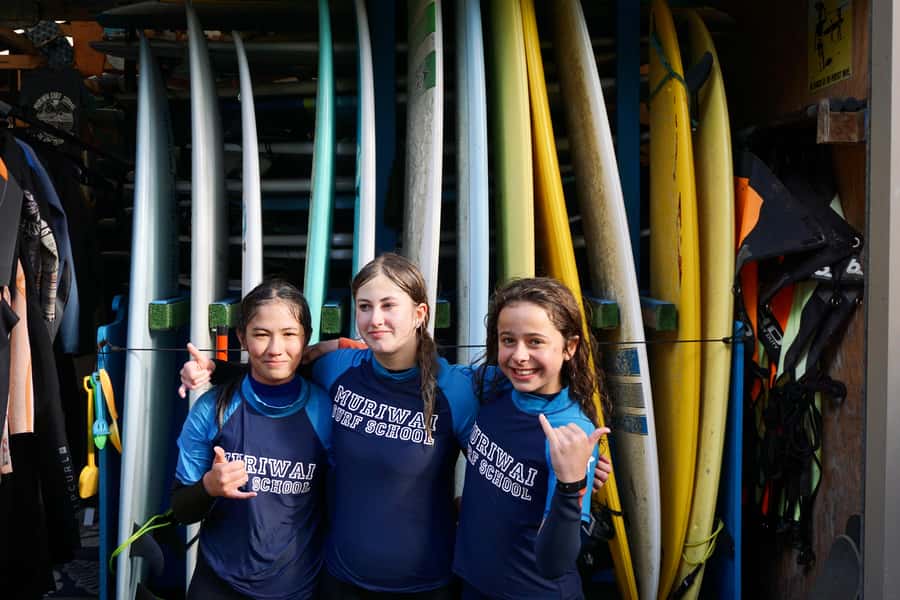
Surf lessons in Auckland, but make it easy. The Muriwai Surf School Intro to Surfing group lesson sends you to the west coast at Muriwai Beach, about 40 minutes from Auckland City, with pro instructors running the show. I like that the basics gear is handled: you get a surfboard and wetsuit so you can show up and learn fast.
My other favorite part is the way you get support in every phase. You start with equipment and standing-up technique on land, then move to wave-check and safety, and once you’re in the water your instructor helps you pick and catch waves with feedback and encouragement.
One thing to consider up front: this isn’t for everyone. The lesson isn’t suitable for children under 9, and it’s not a fit if you’re a non-swimmer.
In This Review
- Key points worth knowing before you book
- Why Muriwai Beach is such a good classroom for surfing
- The two-hour flow: what happens from arrival to first rides
- Equipment and wetsuit: you bring basics, they bring the rest
- Learning the pop-up: where beginners usually need the most help
- Safety on the shore and in the water
- Small group size: why max 10 makes a real difference
- Instructor coaching: clear explanations and patience
- Price and value: how $41 fits a beginner’s reality
- What to do before you arrive (so you don’t waste lesson time)
- Rules that keep the session comfortable
- Getting there from Auckland City: transportation is on you
- Who should book this surf lesson, and who should skip it
- Practical checklist for your Muriwai session
- Should you book Muriwai Surf School’s Intro to Surfing?
- FAQ
- How long is the surfing lesson?
- What does the lesson cost?
- Where is the lesson held?
- Is equipment included?
- What should I bring?
- Is the lesson suitable for non-swimmers or young children?
- What language are the instructors?
Key points worth knowing before you book
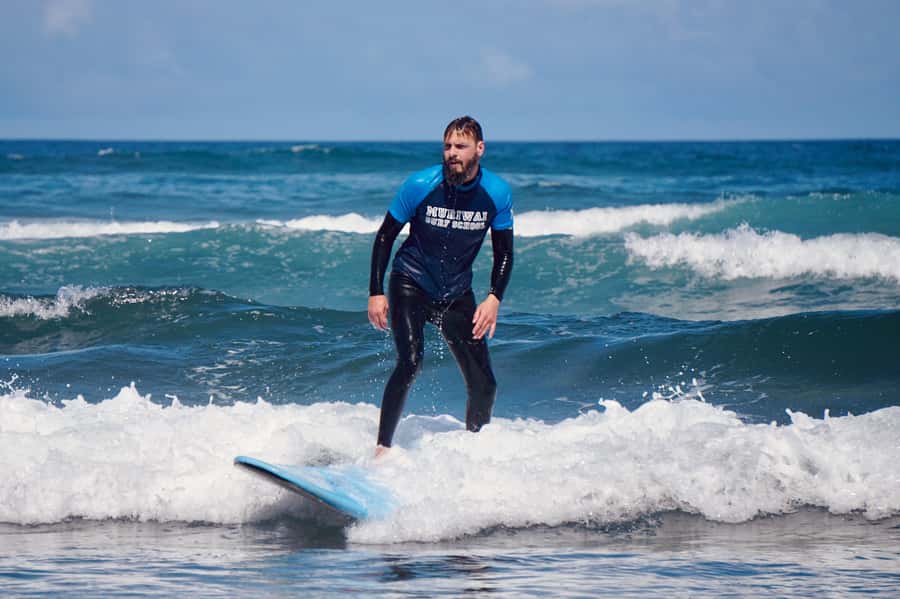
- Muriwai Beach location: a classic west-coast spot about 40 minutes from Auckland City
- Beginner-friendly coaching: basics on shore, then guided wave time in the water
- Small group size: limited to 10 participants, so you’re not lost in the crowd
- Gear included: surfboard and wetsuit are provided
- Real encouragement: in-water help, tips, and lots of positive momentum
Why Muriwai Beach is such a good classroom for surfing

Learning surf is easier when the setting matches the lesson. Muriwai Beach is a proper west-coast Auckland choice, and it’s close enough to be a day activity rather than a whole production. You’re there for the ocean, but the lesson is structured so you’re not just thrown into waves and hoped for the best.
I also like that the course is built for beginners and basic upgrades. If you’ve never surfed before, you still get a clear path: learn what the board is doing, learn how to stand, then learn how to make it happen with real waves and real coaching. If you’ve tried once or twice, you can focus on technique and timing without having to figure it out solo.
And because you’ll be learning near the shoreline, you get the rhythm of surfing without spending the whole session out in the deep end. That matters if your goal is to leave feeling capable, not just exhausted.
You can also read our reviews of more tours and experiences in Auckland



The two-hour flow: what happens from arrival to first rides

This is a 2-hour Intro to Surfing group lesson, and the pacing is part of the value. You’ll start by getting prepared and getting oriented, then you’ll do the learning in layers: equipment, technique, safety, and then water time.
First, you’ll cover the basics of the surf setup. That includes understanding the board and how to move with it, not just how to position yourself for the fun part. Then your instructor shows the correct technique for standing up so you have one repeatable goal instead of a bunch of random tips.
After that, you shift from “learn it” to “read the conditions.” You’ll head down to check the waves, and you’ll get the safety rundown before you get in. This is where a good teacher earns their keep, because wave conditions change minute to minute and you need simple guidance you can follow on the spot.
Once you’re in the water, the lesson becomes hands-on. Your instructor supports you as you pick and catch waves, and they give you feedback and tips while you try again. Some of the best moments in this style of lesson are the short wins, when you finally connect the steps from paddle to pop-up to ride all the way to the beach.
Equipment and wetsuit: you bring basics, they bring the rest
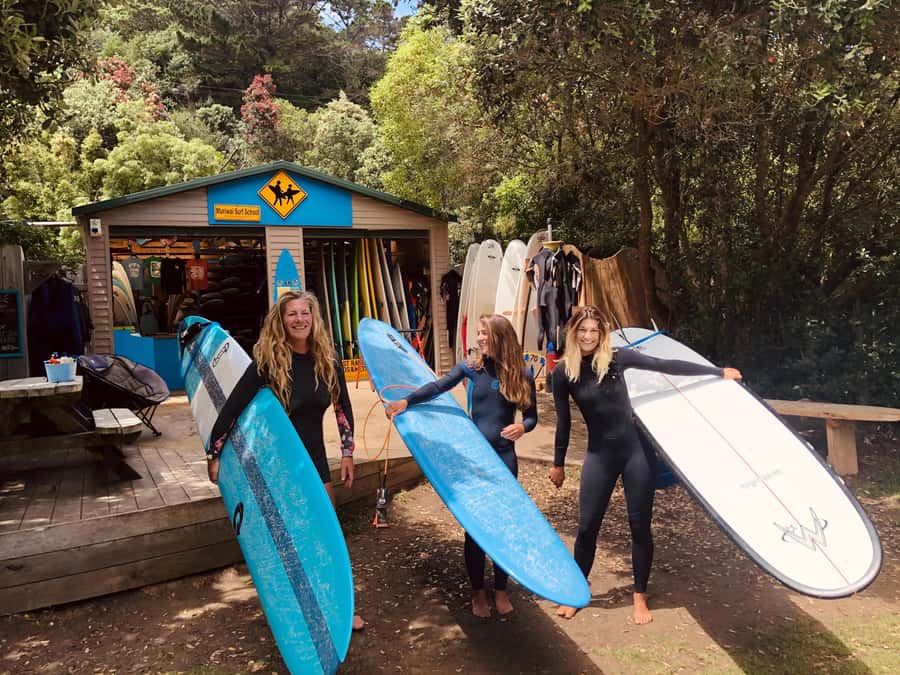
Surf lessons can go sideways when you have to hunt gear last-minute. Here, you get the equipment you need, including a surfboard and a wetsuit. That’s one of the smartest parts of the price, because it removes uncertainty and extra spending.
You still need to bring the simple comfort items. Swimwear is required, and you’ll want a towel for after you get out. Sunscreen helps, and water keeps you from getting dehydrated during your on-the-beach warmup and post-session recovery.
The fact that wetsuits are provided is also good for first-timers. It means you’re not stuck asking whether a rental is available in your size or whether it fits right. You can just focus on learning the mechanics and building confidence.
Learning the pop-up: where beginners usually need the most help
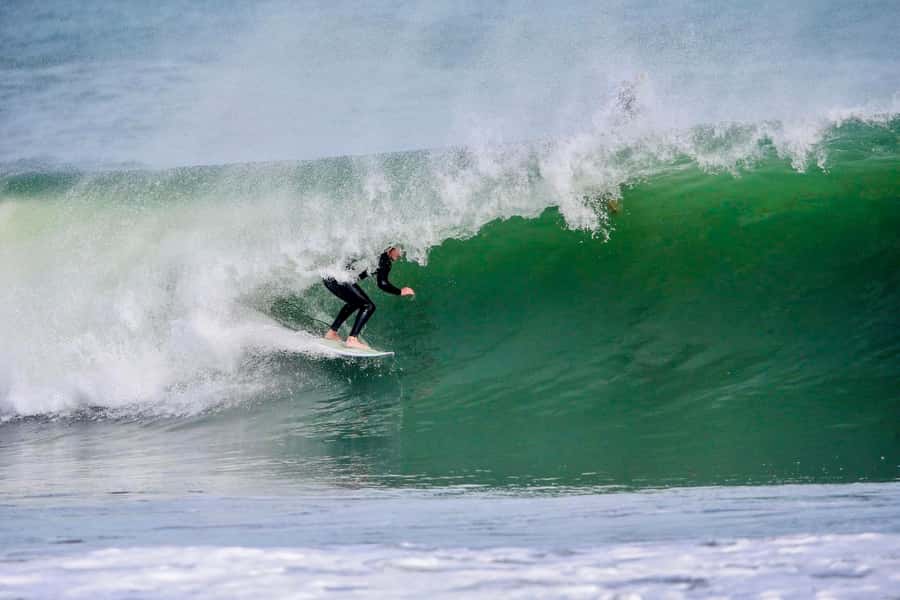
The lesson doesn’t treat standing up like a mystery. The instruction starts on land with the correct technique for popping up, which is the skill that bridges the gap between “I paddled” and “I rode.”
If you’re brand new, this is where you’ll feel the benefit of a structured approach. Instead of a random coaching moment in the water, you learn the steps up front, then you apply them during actual wave sets. Your instructor can then correct what’s happening in real time: body position, timing, and whether your movement matches what the board needs.
If you’ve tried surfing before and didn’t progress, this format can be a reset. You’re not just getting another try. You’re getting a guided remake of the foundations so you can break the cycle of getting close but not quite standing cleanly.
Safety on the shore and in the water

Surf is fun, but it’s also ocean activity, so safety is not optional. Before you get in, you’ll check the waves and cover safety for the water.
That matters for beginners because you’re learning multiple things at once. You’re learning how to manage your board, when to attempt a wave, and how to stay aware of other surfers and changing conditions. A lesson that includes an explicit safety talk reduces guesswork, and it lets you focus on technique.
You’ll also be supported by your instructor once you’re in the water. That support isn’t just emotional. It’s practical help with where to be, what to do next, and how to respond when a wave doesn’t line up the way you imagined.






Small group size: why max 10 makes a real difference
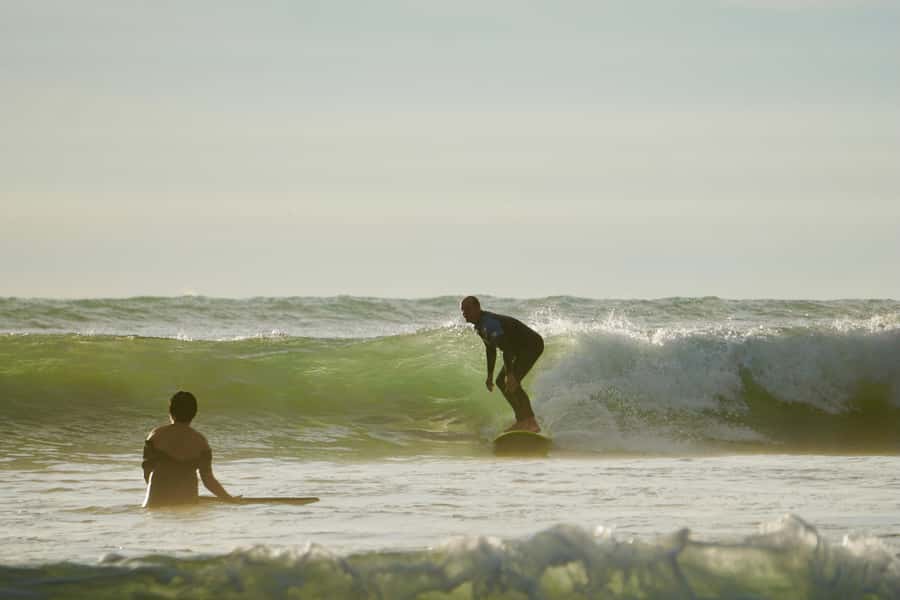
This course is limited to 10 participants, which is an advantage for first-timers. In a bigger class, you can end up waiting while your instructor jumps between groups. With a smaller number, the instructor can actually watch you, correct you, and reset your attempts without turning the session into a slow-moving queue.
I also like that the class style is built around feedback and encouragement. When you’re in and out of attempts, you need fast coaching cues, not general advice you have to translate later. A small group makes that possible.
From what’s been shared about the experience, some sessions can be even smaller, with groups around five. That kind of ratio tends to make each person’s learning feel personal, not rushed.
Instructor coaching: clear explanations and patience

A big reason this lesson scores highly is the coaching style. The instruction is delivered in English, and the teaching approach is described as clear, helpful, and patient. Names that have come up for instructors include Jacob and Jakob, and both spellings show up in feedback tied to excellent support.
What you’re really looking for in a beginner surf instructor is patience with your mistakes and clarity about what to do instead. The course delivers that mix: you get encouragement and feedback at all times, plus specific tips as you try to catch waves and stand up.
There’s also a human side. One of the recurring feelings people describe is an instructor who celebrates the moments when you finally ride for a long stretch to the beach. That matters more than it sounds. Surf progress is emotional as much as technical, and a lesson that keeps you motivated helps you keep trying through the awkward early phase.
Price and value: how $41 fits a beginner’s reality
At about $41 per person for 2 hours, this lesson lands in the “serious value” zone, mainly because of what’s included. Many surf lessons cost more once you factor in gear rental and the time of a fully qualified instructor.
Here, you get the two core expenses handled for you: surfboard and wetsuit. You also get a qualified instructor for the full session, plus the structured progression from basics to safety to supported wave attempts.
If your goal is confidence and skill, not just a photo on a surfboard, this model makes sense. You’re paying for coaching time and guided practice. That’s usually where your money goes further than a less structured rental or a half-baked lesson with little in-water support.
In short: $41 is not just a low price. It’s a price that aligns with what beginners need most, which is real instruction and gear on day one.
What to do before you arrive (so you don’t waste lesson time)
You should arrive 15 minutes before the lesson starts. That time matters because you’re getting ready on the beach and meeting the instructor with enough buffer to start smoothly.
In practice, I’d treat this like an active day, not a casual stroll. Bring swimwear you can wear comfortably under a wetsuit. Pack a towel you’ll actually want to dry off with, and bring sunscreen you can reapply later.
Also plan to bring water. You’ll be outside, moving, and learning. Even if it doesn’t feel like hard exercise at the start, surfing ramps up fast.
There’s one more thing to keep in mind if you have medical conditions. Inform the instructor beforehand so they can guide you appropriately throughout the session.
Rules that keep the session comfortable
The lesson has clear behavior rules: no smoking, and no alcohol or drugs. That’s typical for organized activity, but it’s also part of what makes the experience feel safe and focused, especially when you’re sharing the learning space with others.
If you’re going with friends, it can be tempting to turn it into a party day. This course works better when everyone is present mentally and ready to learn, not distracted.
Getting there from Auckland City: transportation is on you
Transportation to and from the activity location is not included. Since Muriwai Beach is about 40 minutes from Auckland City, you’ll want to plan your drive, rideshare, or pickup timing so you don’t show up stressed.
This matters because surfing lessons have tight pacing. If you arrive late, you miss setup time and that first wave-read portion of the lesson. Better to build in buffer than to gamble with traffic.
Who should book this surf lesson, and who should skip it
This is a great fit if you:
- are a beginner or want a stronger grasp of the basics
- value hands-on instruction and feedback
- want gear included so you can start right away
- prefer learning in a small group
It’s not a fit if:
- you’re a non-swimmer
- you’re traveling with children under 9
That last part is important. Even though it’s called an intro course, it still relies on you being comfortable in the water environment.
Also, if you’re hoping to surf without coaching, this isn’t that kind of experience. It’s a lesson, so your best results come when you listen, try, and take the feedback on board quickly.
Practical checklist for your Muriwai session
Here’s what you should pack based on the lesson requirements:
- Swimwear
- Towel
- Sunscreen
- Water
And remember:
- arrive 15 minutes early
- inform the instructor about any medical conditions
- no smoking and no alcohol or drugs
If you do just that, you’ll be ready to focus on what the instructor teaches instead of stopping to improvise.
Should you book Muriwai Surf School’s Intro to Surfing?
I think you should book this if you want a structured beginner surf experience at a real Auckland beach location. The big reasons are simple: gear included, small group size up to 10, and instructor support that continues once you’re actually in the water.
You should skip it if you can’t swim or you’re bringing younger kids who don’t meet the minimum age requirement. And if you’re the type who hates early mornings or tight timing, factor in the 15-minute arrival rule and your commute to Muriwai.
If you’re on the fence, my advice is to treat this as your start button. It’s designed to move you from basics to first real attempts, with coaching and encouragement that keeps the session fun while still being safe.
FAQ
How long is the surfing lesson?
It lasts 2 hours.
What does the lesson cost?
It’s priced at $41 per person.
Where is the lesson held?
It takes place at Muriwai Beach on Auckland’s west coast.
Is equipment included?
Yes. You’ll receive a surfboard and a wetsuit.
What should I bring?
Bring swimwear, a towel, sunscreen, and water.
Is the lesson suitable for non-swimmers or young children?
No. It’s not suitable for non-swimmers, and it’s not for children under 9 years old.
What language are the instructors?
The instructor teaches in English. The group is limited to 10 participants.