REVIEW · AUCKLAND
2 Hour Surf Lesson – Te Arai Beach
Book on Viator →Operated by Aotearoa Surf School · Bookable on Viator
Surfing on Te Arai is a fast skill boost. You get all the gear and hands-on coaching that targets the popup and takeoff, so your standing attempt is the real goal, not just watching from shore. One consideration: like any surf lesson, the exact time you spend on waves can shift with conditions.
I also like how the small-group setup helps you get individual fixes, not generic tips. In particular, the coaching style highlighted by recent lessons with instructors like Maya is all about sharp observation and adapting instruction to different levels, including kids learning for the first time.
In This Review
- Key Things Worth Knowing Before You Paddle Out
- Te Arai Beach in North Auckland: why this spot works for first-timers
- Meeting Aotearoa Surf School and getting kitted fast
- Inside the 2.5-hour session: how the lesson is actually structured
- Safety, ocean awareness, and why it changes your whole confidence
- Positioning and paddling technique: the part nobody wants to hear about, but everyone needs
- Timing & takeoff: where real waves start teaching you
- Mastering the popup: the standing moment you came for
- What makes the group format work: coaching you can actually use
- Gear included: what you can skip and what you should still plan for
- Price and value: is $50.92 worth it for a beginner surf skill?
- Who should book this surf lesson?
- Photos, practice later, and the real goal after you leave
- Should you book the 2 Hour Surf Lesson – Te Arai Beach?
- FAQ
- How long is the surf lesson?
- Where does the lesson start?
- What’s included in the price?
- Do I need to bring my own wetsuit or surfboard?
- Is pickup available?
- How many people are in the group?
- What level of surfer is this for?
- Are souvenir photos included?
- What is the cancellation policy?
- Is a mobile ticket used?
Key Things Worth Knowing Before You Paddle Out
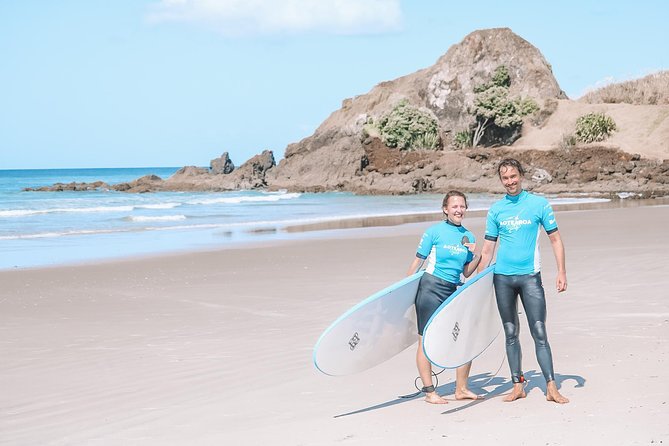
- Small group size (max 12): you’ll have more of an instructor presence when you’re practicing.
- Gear is included: surfboard, leash, wetsuit, and rash shirt are provided, plus sunscreen.
- The lesson is skill-first: safety, positioning, paddling technique, timing, and the popup are the focus.
- Te Arai Beach is built for learning: the North Auckland east-coast setting is a solid place to build confidence.
- You’ll learn beyond standing once: the goal is ocean awareness and getting out through waves, not just one lucky ride.
Te Arai Beach in North Auckland: why this spot works for first-timers
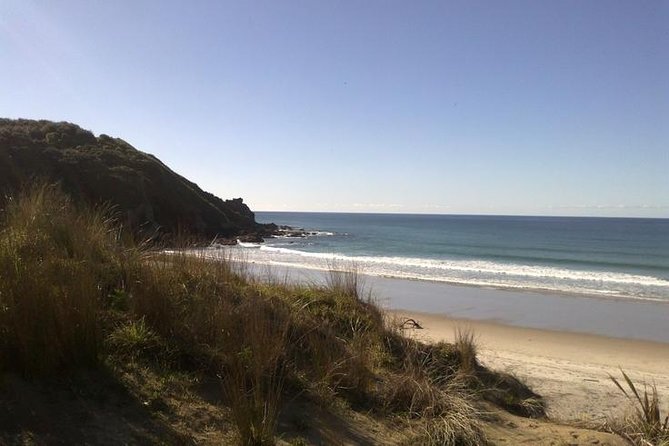
Te Arai is on Auckland’s North Coast, and it’s the kind of shoreline that makes sense for learning. You’re not trying to figure out a new beach, new tides, and new surf rules all at once. Instead, the lesson is designed around the basics you’ll need to feel in control once you’re out beyond the first small waves.
What I like here is the emphasis on “proper surfing,” which usually means the instructor pays attention to the parts that matter most for beginners. You’ll work on positioning (where you sit on the board and how you face the wave), paddling technique (how you move efficiently and stop wasting energy), and the transition that most people struggle with: the popup.
Also, the setting helps your brain stay calm. When you’re learning to surf, nerves are normal. Beautiful views can’t replace good technique, but they do make the experience feel easier to stick with, especially when you’re taking your first serious attempts at standing.
You can also read our reviews of more tours and experiences in Auckland


Meeting Aotearoa Surf School and getting kitted fast
The session starts at Aotearoa Surf School, at 708 Te Arai Point Road, Te Arai. If pickup is offered for your booking, you’ll see that option ahead of time. In any case, plan to arrive with enough time to get settled before you’re in the water.
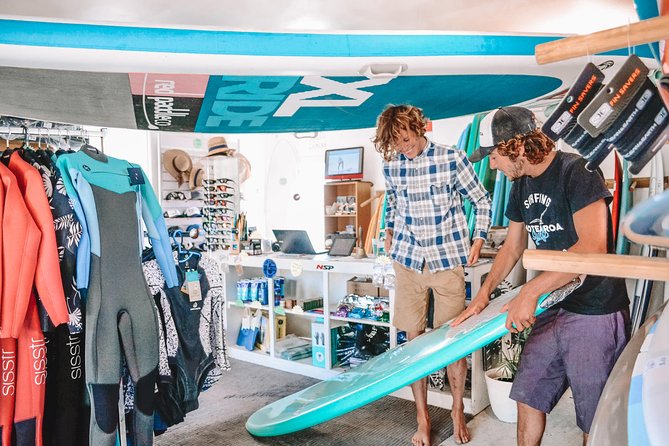
Once you’re there, you’ll get fitted with the key pieces you need to stay comfortable: a wetsuit, a rash shirt, and the board and safety gear. The package also includes a surfboard and leash, so you’re not trying to source equipment or show up worrying you chose the wrong size.
This gear setup matters more than it sounds. With surfing, comfort changes everything. If you’re too cold or restricted, you can’t focus on paddling rhythm or timing. And if you don’t have a leash, you lose a lot of safety and confidence right away. The included sunscreen protection is another practical touch because Auckland sun can be strong even when the water is doing its cool-weather thing.
Inside the 2.5-hour session: how the lesson is actually structured
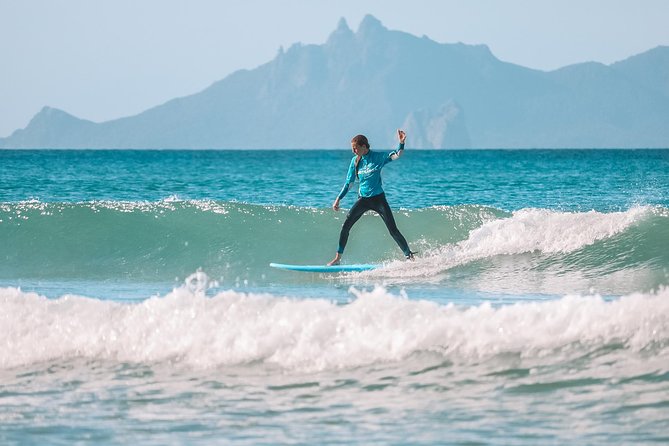
Even though it’s described as a 2-hour surf lesson, the total experience is about 2 hours 30 minutes. That extra time is important. Surf lessons aren’t just “one instruction moment.” You need time to gear up, practice multiple tries, and get corrections early enough that they stick.
The lesson content is built around a clear progression:
- Safety and ocean awareness
- Equipment basics and how the board should behave under you
- Positioning
- Paddling technique
- Getting out through the waves
- Timing & takeoff
- Mastering the popup
I like this list because it mirrors how a real beginner improves. You can’t skip the earlier steps and just hope standing works out. If your paddling is off, you won’t get into position. If you’re not timed, you’ll pop up late and catch the tail end. If you don’t know how to work through waves on the way out, you’ll spend energy fighting the water instead of working with it.
Safety, ocean awareness, and why it changes your whole confidence
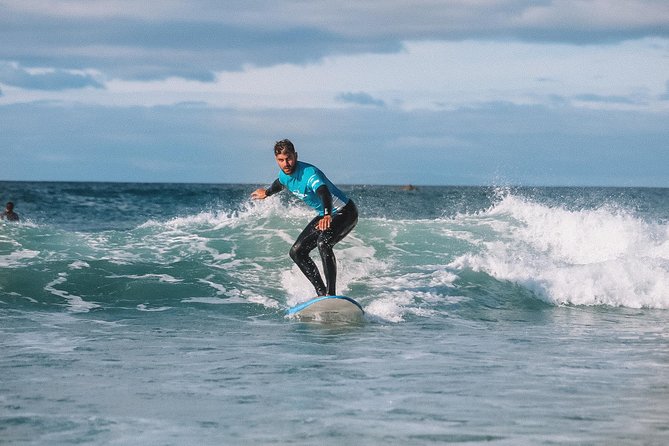
The most valuable thing in any first surf lesson is getting your safety basics right, and this one starts there. You’ll be taught safety and ocean awareness, which in practice means you learn how to think before you act: where to place yourself, what to watch for, and how to avoid unnecessary risk while you’re learning.
Beginners often focus only on the board. But the ocean controls your timing. The minute you learn how to time your paddle and takeoff with what the waves are doing, everything improves: you get more attempts on the right wave face, and you stop feeling like the ocean is random or unfair.
It’s also why the instruction on getting out through the waves matters. If you’ve ever tried to walk out into surf that’s moving toward you, you know it’s harder than it looks. In a lesson setting, you don’t just have to hope you’ll get out. You’re coached so you can move through the surf zone more efficiently and keep your focus on the next wave.
Positioning and paddling technique: the part nobody wants to hear about, but everyone needs
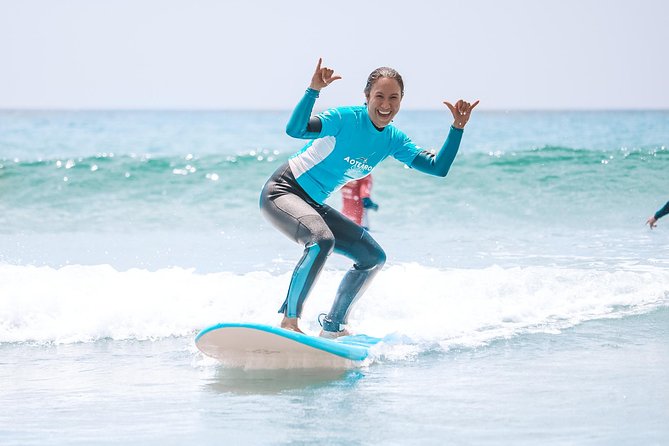
Let’s be honest: paddling practice isn’t as fun as the first standing moment. But it’s the engine of your success.
The lesson explicitly includes positioning and paddling technique, and that means you’re learning how to:
- line up your body so you don’t waste motion
- paddle in a way that helps you build momentum
- manage your board so it’s pointing where you need it for the next takeoff
This is where small-group coaching pays off. With a group, you might assume your instructor can only watch from a distance. But the max group size of 12 travelers helps your instructor spend more time spotting issues in your form. If your arms are reaching wrong, if your board angle is drifting, or if your timing is off, this kind of feedback is what turns a struggle into improvement.
You can also read our reviews of more tours and experiences in Auckland

Timing & takeoff: where real waves start teaching you
Once your paddling and positioning improve, you’ll work on timing & takeoff. This is the step that separates trying to stand from actually catching a ride.
What you’re learning here is not just how to pop up. It’s how to choose the right moment to do it so your board is moving with the wave instead of against it. If you pop up too early, you can stall. Too late, and the wave has already carried the best part past you.
This is also where “ocean awareness” shows up again. Timing is a learned relationship between your movement and the wave’s rhythm. You start to feel what a set wave is doing and how to commit when your opportunity is right.
Mastering the popup: the standing moment you came for
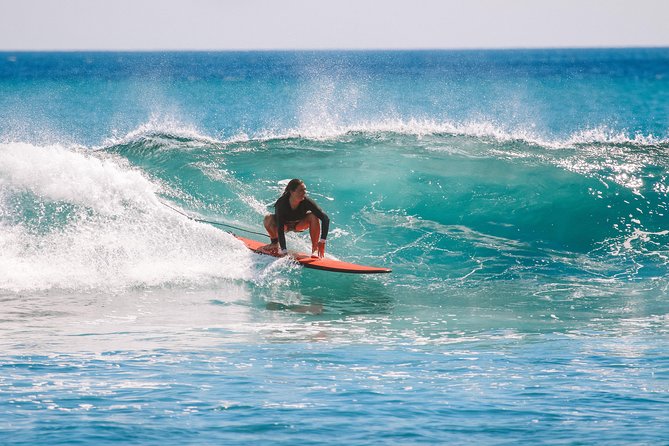
The highlight goal is clear: master the popup so you’re actually standing and riding waves. That’s the moment you want, and it’s also the moment many people fear they’ll never get.
The best evidence for this lesson working is in the results people focus on: getting up, catching waves, and feeling confident enough to practice again later. One standout detail from a lesson experience with instructor Maya was how she managed different levels with ease, including support for a 7-year-old learning for the first time. That kind of approach usually means you’re not stuck waiting for “your turn.” You get corrections when you need them and encouragement when you’re close.
In plain terms, the popup is where your lesson stops being theory and becomes a skill you can repeat later. When you leave with the fundamentals, you’re not starting from zero if you rent a board again.
What makes the group format work: coaching you can actually use
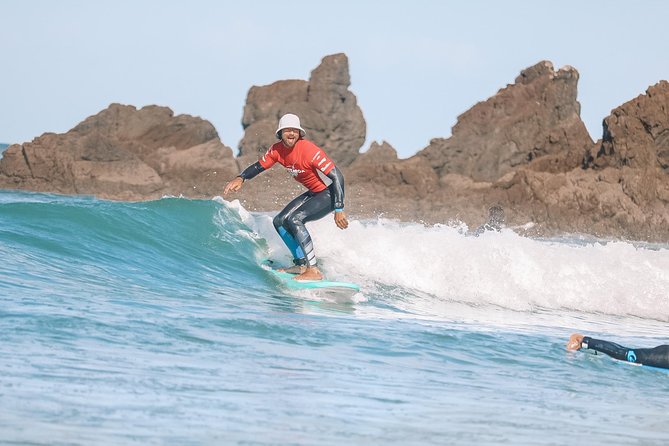
A max of 12 travelers is a meaningful cap for a two-hour surf lesson. Smaller groups are easier for instructors to manage, but the real benefit is feedback quality. You’ll be seen more often, and you’re more likely to get the kind of correction that changes your next attempt.
Another practical benefit: you’ll learn faster by watching others too. When a student is close to standing, you can often spot the specific reason they’re not there yet. Then when it’s your turn, you’re already thinking about the right adjustment.
This is also a lesson where different experience levels can be supported. The lesson format notes that it can be designed for beginner, intermediate, and more advanced surfers. So even if you’re the most new person in the group, the instructor isn’t stuck teaching only one pace.
Gear included: what you can skip and what you should still plan for
This lesson includes nearly everything that typically makes surfers dread day-of prep:
- Surfboard
- Leash
- Wetsuit and rash shirt
- Sunscreen protection
- All taxes, fees, and handling charges
That means you can show up and focus on learning rather than making last-minute purchases. It’s a big value win if you’re visiting and don’t want to add surf gear to your packing list.
Two practical notes for your own planning:
- Sunscreen is covered, but you should still consider bringing your own if you prefer a specific brand or skin sensitivity needs.
- Souvenir photos are not included, and they’re available to purchase. If photos matter to you, decide in advance whether you’ll want them so you’re not surprised later.
Price and value: is $50.92 worth it for a beginner surf skill?
At $50.92 per person, this lesson lands in a reasonable “pay to learn fast” category for Auckland. The value comes from what’s bundled: gear, instruction, and safety time. You’re not paying only for the board or only for the instructor. You’re paying for the combination that helps beginners get coordinated quickly.
The other value lever is the lesson length. Roughly 2 hours 30 minutes is enough time to practice the progression: safety and ocean awareness, positioning and paddling, then takeoff and popup. Short lessons can leave you feeling like you only received instructions you haven’t used yet. This format is closer to what you need to start turning instructions into muscle memory.
And if you want a practical comparison, think about the alternative: watching surf videos and trying to copy them without coaching. The lesson is basically buying you quicker correction and a faster path to standing on a wave.
Booking timing can also affect value. The average booking window is about 35 days in advance, so if you’re traveling in peak season, you’ll want to plan early to get the slot you want.
Who should book this surf lesson?
This lesson is a strong fit if you:
- have wanted to try surfing but don’t know where to start
- want real coaching on the steps that make standing possible
- prefer a small-group setting where the instructor can watch and correct you
- want a session you can build on later, not just a one-off thrill
It’s also a good option for mixed ability groups because instruction can be adapted across beginner to intermediate levels. The fact that a 7-year-old was supported in at least one recent experience is a useful signal that the instructor style can meet kids at their level.
If you’re already an advanced surfer, you might still enjoy the ocean awareness and technique tune-up, but this lesson is clearly designed for skill-building that begins at fundamentals.
Photos, practice later, and the real goal after you leave
The lesson’s goal is not just to have fun in the moment. It’s to leave you with repeatable skills you can practice later. The emphasis on popup, timing, and getting out through waves is exactly what helps you transition from first ride to actual learning.
And there’s a practical reason people feel excited after lessons like this: standing up makes you feel capable. One of the best takeaways described from a surf session was moving from learning to standing riding waves, then feeling confident enough to hire a board anywhere else you travel.
Souvenir photos aren’t included, but you can purchase them if you want a keepsake. If you’re camera-shy, you may prefer to focus fully on your attempts and skip the photo upsell.
Should you book the 2 Hour Surf Lesson – Te Arai Beach?
If your goal is to learn the basics properly and actually stand on a wave, I’d say this is an easy yes. The included gear, the small-group coaching, and the explicit focus on popup and takeoff are the right ingredients for beginners who want progress, not just time in the ocean.
I’d think twice only if you’re expecting a completely effortless experience where every wave is guaranteed. Surf lessons depend on conditions, and your time in the water can vary. But if you show up ready to learn, listen, and practice, the structure here is built for you to come away with skills that carry beyond the lesson.
FAQ
How long is the surf lesson?
The experience is approximately 2 hours 30 minutes, with a 2-hour surf lesson as part of that total time.
Where does the lesson start?
You’ll meet at 708 Te Arai Point Road, Te Arai 0975, New Zealand. The activity ends back at the meeting point.
What’s included in the price?
The price includes the 2-hour surf lesson, all required equipment (surfboard, leash, wetsuit, and rash shirt), a qualified and experienced instructor, sunscreen protection, and all taxes, fees, and handling charges.
Do I need to bring my own wetsuit or surfboard?
No. The lesson provides the wetsuit, rash shirt, surfboard, and leash as part of the included equipment.
Is pickup available?
Pickup is listed as offered. You’ll want to check what options apply to your booking.
How many people are in the group?
The maximum group size is 12 travelers.
What level of surfer is this for?
The lesson can be designed for beginner, intermediate, and more advanced surfers, and it covers the core fundamentals you need to feel confident on a surfboard.
Are souvenir photos included?
No. Souvenir photos are available to purchase, but they are not included.
What is the cancellation policy?
You can cancel for a full refund if you cancel up to 24 hours in advance of the experience start time. If you cancel less than 24 hours before the start time, the amount paid is not refunded.
Is a mobile ticket used?
Yes. A mobile ticket is part of the experience, and you receive confirmation at booking. Confirmation is also received at the time of booking completion.