Auckland hides stories worth walking for. This self-guided GPS audio route threads Māori and European moments through central Auckland, starting at Khartoum Place and ending near Princes Wharf. I like the offline access to audio, maps, and geodata, because it keeps you moving without hunting for signal.
Two more things I love: the tour connects big turning points—like New Zealand being the first country to grant women the right to vote—with the Māori legend of a god of earthquakes and volcanoes. One possible drawback to plan for: you’ll need to bring your own smartphone and headphones, and several famous stops are pass-by only (no tickets included).
In This Review
- Key highlights you’ll feel as you walk
- Getting oriented at Khartoum Place and Auckland’s vote-for-women story
- Albert Park: local flora, and the volcano-god legend in the open air
- Emily Place Reserve and the historic “pass-by” rhythm of the CBD
- Britomart to the waterfront: Ferry Building, Sky Tower, and what to do without tickets
- Viaduct Harbour to Princes Wharf: finishing with the water views you’ll remember
- How the GPS audio tour really works (offline maps are the big deal)
- Price, timing, and the small practical stuff you’ll thank yourself for
- Should you book this Auckland hidden stories walk?
- FAQ
- How long is the Auckland self-guided walking tour?
- Where do I start and where does the tour end?
- What’s included in the price?
- Do I need to bring a smartphone and headphones?
- Are admissions to places like the Auckland Art Gallery, Ferry Building, or Sky Tower included?
- What if I need to cancel?
Key highlights you’ll feel as you walk
- Straightforward GPS guidance so you’re not constantly checking your map
- Offline audio + maps help when service is spotty in the CBD
- A strong mix of Māori legend and European-era milestones in one compact route
- Pass-by landmarks (art gallery glimpse, Ferry Building, Sky Tower) without ticket hassles
- Flexible pacing—you can pause, restart, and keep going, which really helps in weather
Getting oriented at Khartoum Place and Auckland’s vote-for-women story
You start at Khartoum Place in Auckland Central, and the route is designed so you can get your bearings fast. The audio is GPS-based, so when you’re in the right spot, the story kicks in and you keep moving at your own speed.
This first chunk is a smart way to warm up your brain for the whole walk. You’ll connect the city to a major national milestone: New Zealand was the first country to grant women the right to vote. It’s the kind of fact that changes how you interpret nearby streets—suddenly Auckland Central isn’t just buildings and cafes. It’s part of a wider story about who gets a voice.
Right away, you also learn that the tour is built around looking and listening, not rushing between tickets. Even when you get a glimpse of places like the Auckland Art Gallery, admission is not included. That’s not a problem if you’re thinking of this as a walking story-ride first, and a museum day second.
You can also read our reviews of more walking tours in Auckland



Albert Park: local flora, and the volcano-god legend in the open air
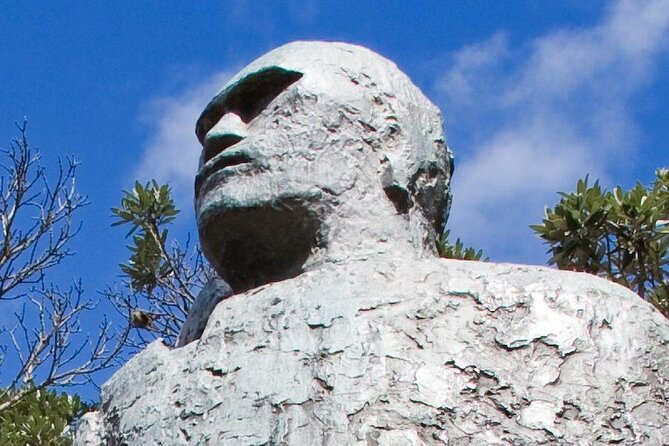
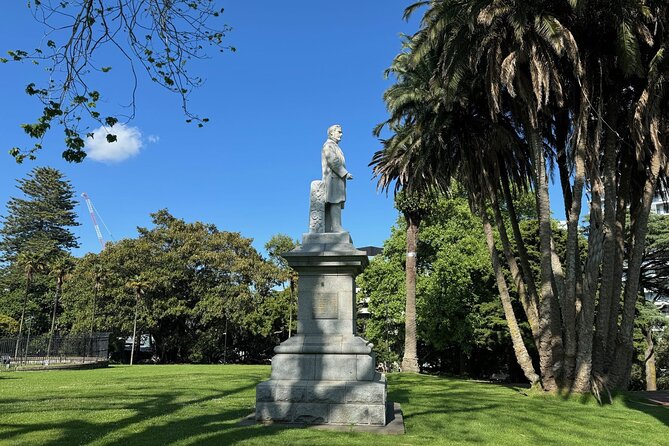
Albert Park is where the walk starts to feel like a break from city life. You’ll pass through the park’s paths with local flora around you, and it’s a nice reset before you head deeper into the CBD.
Then comes the story that ties Auckland to its land. You’ll hear the Māori legend of a god of earthquakes and volcanoes, paired with the idea that Auckland has volcanic origins. Even if you’ve read a postcard version of this before, the audio format helps because it lands at the scale of a street walk. You can look around while the explanation makes sense.
A quick note on pacing: one stop here is listed as about 5 minutes, so don’t plan to wander for an hour in the park. Instead, treat it like a slow moment inside a steady walk. If you’re the type who likes to watch for birds and study plants, you’ll still get that—just know the tour moves on.
Emily Place Reserve and the historic “pass-by” rhythm of the CBD
After Albert Park, the tour shifts into short, focused segments where you mainly orient and listen. You’ll pass by Emily Place Reserve, with local history around this small green space and street-adjacent heritage.
Next up is a stretch where you’ll see several landmarks at a walking pace. Maclaurin Chapel is along the way, but entry to the chapel itself isn’t included. That’s useful to know because you can admire the setting without building time around tickets or opening hours.
You’ll also pass through Britomart and Te Komititanga Square. These are the kinds of places where you can see the city’s layers quickly—older cues next to modern functions. The tour keeps you from getting lost in the details by focusing on the story thread rather than asking you to memorize architecture trivia.
One practical perk here shows up in the reviews: the audio instructions help you know which direction to face. That matters more than it sounds. In a city center full of corners and confusing pedestrian crossings, having the audio tell you where to look can save time and frustration.
Britomart to the waterfront: Ferry Building, Sky Tower, and what to do without tickets

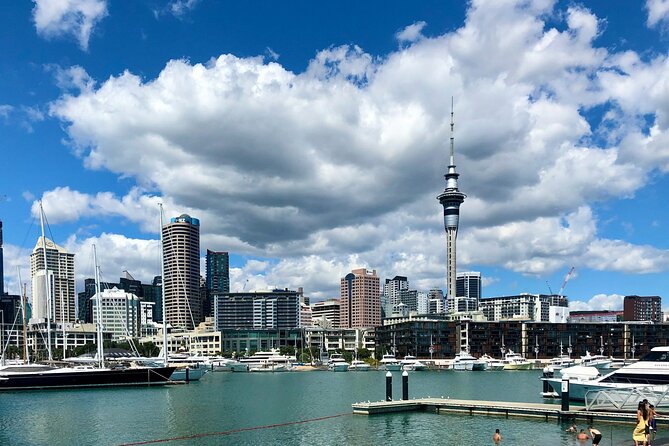
As you move toward the waterfront, the route brings you past the Ferry Building and Sky Tower. Both are big-name landmarks, and both are pass-by stops, not entry included. You get the context and the views opportunities, but you’re not forced into paying extra for attractions.
This approach is good value if your goal is city understanding, not checklists. You can look up from street level, snap a photo if the timing is right, and keep walking. If you later decide you want a ticket for the Sky Tower or an inside visit at another stop, you can add that on your own schedule.
Also, you’re in an area where the walk itself is part of the show. The route shifts from story stops to a payoff zone: once you’re near the harbor, the skyline and water give you a visual way to remember what you heard earlier. It’s easier to connect facts to place when you’re standing in front of the setting those facts relate to.
Viaduct Harbour to Princes Wharf: finishing with the water views you’ll remember
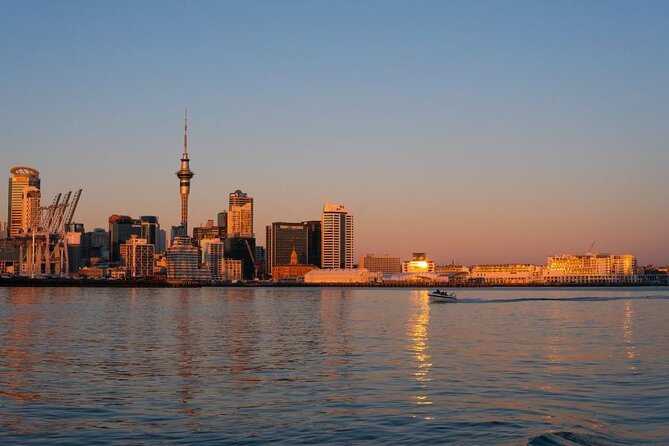
The tour ends with a classic Auckland payoff: the Viaduct Harbour and then Princes Wharf. The audio has you walking along the harbor, taking in the views, before it brings you to the end point near Hilton Auckland on Quay Street.
Ending at Princes Wharf is practical. You’ve got a clear finish line and a high-activity zone afterward, which makes it easy to plan dinner or an evening drink without needing transport. One of the standout points from customer feedback is that the tour includes helpful pointers for where to eat and drink afterward. That’s the kind of bonus that’s hard to replicate with a generic map.
If weather is bad, this finale still works because you’re moving along open streets and waterfront edges where you can adjust your pace. You don’t have to be inside a building to keep the experience going.
You can also read our reviews of more guided tours in Auckland





How the GPS audio tour really works (offline maps are the big deal)
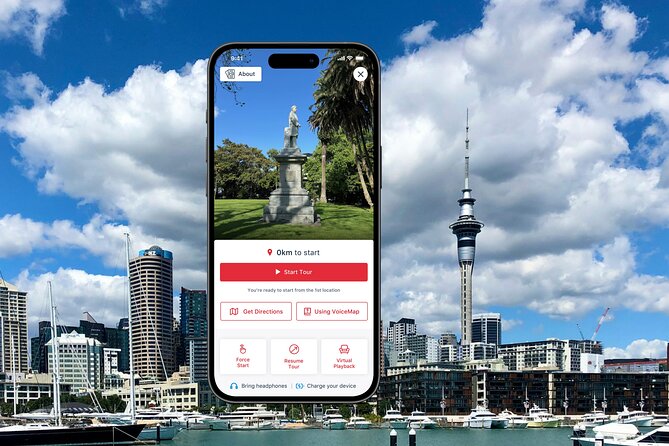
This experience runs through an app for Android and iOS using your phone. The key benefit is self-guided GPS, meaning you’re not waiting on anyone and you’re not stuck on a group schedule. You also get offline access to audio, maps, and geodata, which is a big help in central areas where coverage can vary block by block.
Because it’s GPS-based, the tour is easiest when you’re ready to walk and follow the route line. If you stop for too long, just resume when you’re back on track—most of the experience is timed through where you are, not what the clock says.
Two more value points matter. First, you get lifetime access in English before your booking date and after it, so this isn’t a one-and-done ticket. Second, it’s a private activity, so only your group uses it. That’s a quiet advantage if you like to pause frequently for photos, or if you just don’t want to share headsets and attention with strangers.
One caution: offline systems are only as good as the initial download. There’s at least one documented case of trouble downloading with multiple errors and no response in time, which left someone unable to use the tour during their short stay. The practical takeaway is simple: download before you leave, test your audio/maps early, and if something fails, contact the provider right away. The operator name shown in the support response is Helene, and the message indicates they can help identify what’s wrong and process a refund if it’s a technical issue.
Price, timing, and the small practical stuff you’ll thank yourself for
At $11.99 per person for about 90 minutes to 2 hours, this is priced like a quick, story-led walk—not a big-ticket attraction. The value comes from two things: you get guided storytelling for the whole route, and you can repeat it later because of lifetime access. For many people, that turns one purchase into multiple use-cases: first visit plus a later return when you want a different pace.
The tour also runs essentially any time day or night during the listed window (it shows 12:00 AM to 11:59 PM). That flexibility is great for Auckland, where rain can show up without warning. One reason people liked this format is that when it started raining a lot, the self-guided approach allowed them to stop and start on their own choice rather than forcing a fixed group itinerary.
What you should plan around is what’s not included. You bring your own smartphone and headphones. Admission to places you may glimpse or pass is not included—so don’t build your day around entering the gallery, Ferry Building, or Sky Tower based on this tour alone. Also, food and drink aren’t included, so treat the tour as a pre-dinner activity.
The route itself is central Auckland, and it’s marked as near public transportation. That makes it easy to combine with other plans: you can use it to get oriented on arrival day, or to fill a window between meetings, museums, or harbor walks.
Should you book this Auckland hidden stories walk?
Book it if you want a low-cost way to understand Auckland without committing to ticket lines. This works well for people who enjoy walking at their own pace and who like history told through specific places—especially when those stories mix Māori legend with European-era milestones.
Skip it or think twice if you rely on last-minute phone downloads and you don’t want any tech involved. Because the audio is delivered through an app, you’ll need your device battery and your downloads to cooperate. Also, if your main goal is to go inside major attractions, you’ll still need separate tickets since several headline spots are pass-by only.
If you’re a practical planner, here’s the best way to use this tour: do it once early enough that the stories help you interpret the rest of your day. Then use the afterward tips (like where to eat and drink) to turn the walk into a complete evening plan.
FAQ
How long is the Auckland self-guided walking tour?
The tour takes about 1 hour 30 minutes to 2 hours, including walking the route and passing by the attractions.
Where do I start and where does the tour end?
It starts at Khartoum Place, Auckland Central, Auckland 1010 and ends at Hilton Auckland, 147 Quay Street, Auckland Central, near Princes Wharf.
What’s included in the price?
Included are lifetime access to the English tour, a self-guided GPS format, directions to the starting point, an app for Android and iOS, and offline access to audio, maps, and geodata.
Do I need to bring a smartphone and headphones?
Yes. A smartphone and headphones are not included.
Are admissions to places like the Auckland Art Gallery, Ferry Building, or Sky Tower included?
No. Admission to those specific attractions isn’t included in the tour. The tour may include glances or pass-by views, but entry is not part of it.
What if I need to cancel?
You can cancel for a full refund if you cancel at least 24 hours before the experience start time. If you cancel within 24 hours of the start time, the amount paid isn’t refunded.